

-
Google has issued equity to Berkshire Hathaway in a deal that signals far more demand and a future where capital is the ultimate commodity.
-
OpenAI and Nvidia are both under threat from Google; I like OpenAI’s chances best, but they need an advertising model to beat Google as an Aggregator.
-
Google Cloud Next 2024 was Google’s most impressive assertion yet that it has the AI scale advantage and is determined to use it.
-
Google could do more than just win the chatbot war: it is the one company that could make a universal assistant. The question is if the company is willing to risk it all.
-
Google is unique in that their business was built on being the best. The company, though, benefited from the open web. That is not the case in mobile.
-
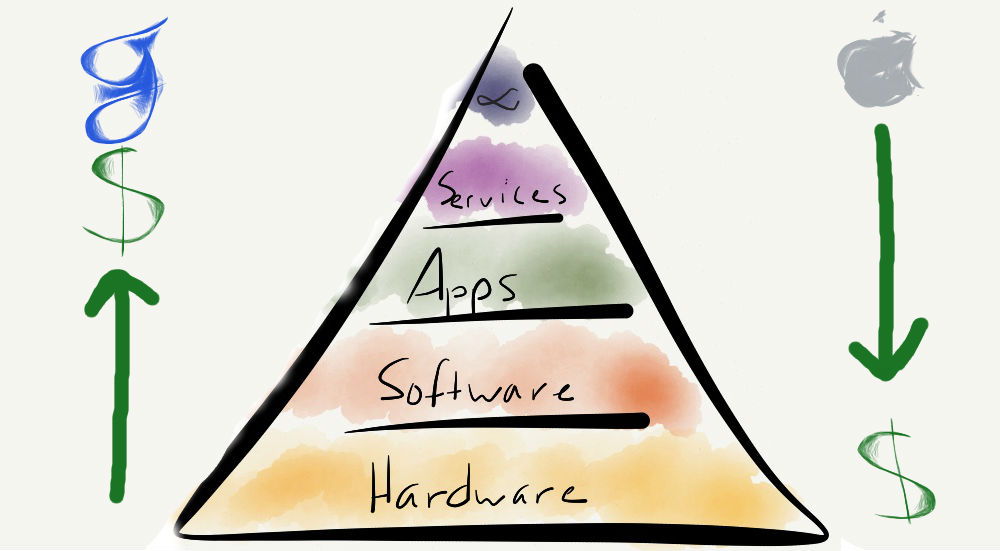
Google is at its best when its product focus follows its business model; for too long Android was a detour.
-
NESN 360, NESN and vMVPDs, Cable and the User Experience
NESN, the regional sports network that shows Red Sox games, is going over-the-top, but its appeal may be limited. Plus, reflecting on Cable’s Last Laugh.
-
Browsers and Regulation; Thin Platforms, Bundling, and Unbundling
The lessons regulators should learn from the Microsoft antitrust case, and how Thin Platforms are part of the unbundling and bundling cycle.
-
Google I/O; “Near Me”, Competition, and Innovation; Pixel and Fitbit
This year’s Google I/O built on last year’s focus in a way that lends credence to Google’s longer-term goals. Plus, Pixel hardware and the problem of design by regulation.
-
An Interview with Coda Founder (and Bundle Expert) Shishir Mehrotra
An interview with Coda founder Shishir Mehrotra about documents, go-to-market, and competing with Microsoft, plus bundling, Spotify, and Passport.
-
An Interview with “Father of the iPod” Tony Fadell
An interview with Tony Fadell about the iPod, iPhone, Apple’s history with Samsung, Nest, the future of ARM, and his new book “Build”.
-
Google’s Spotify Deal, The Ideal App Store Approach, Spotify’s South Korea Option
Google and Spotify’s deal is light on details, but it’s clear who the big winners are.