

-
Google has issued equity to Berkshire Hathaway in a deal that signals far more demand and a future where capital is the ultimate commodity.
-
OpenAI and Nvidia are both under threat from Google; I like OpenAI’s chances best, but they need an advertising model to beat Google as an Aggregator.
-
Google Cloud Next 2024 was Google’s most impressive assertion yet that it has the AI scale advantage and is determined to use it.
-
Google could do more than just win the chatbot war: it is the one company that could make a universal assistant. The question is if the company is willing to risk it all.
-
Google is unique in that their business was built on being the best. The company, though, benefited from the open web. That is not the case in mobile.
-
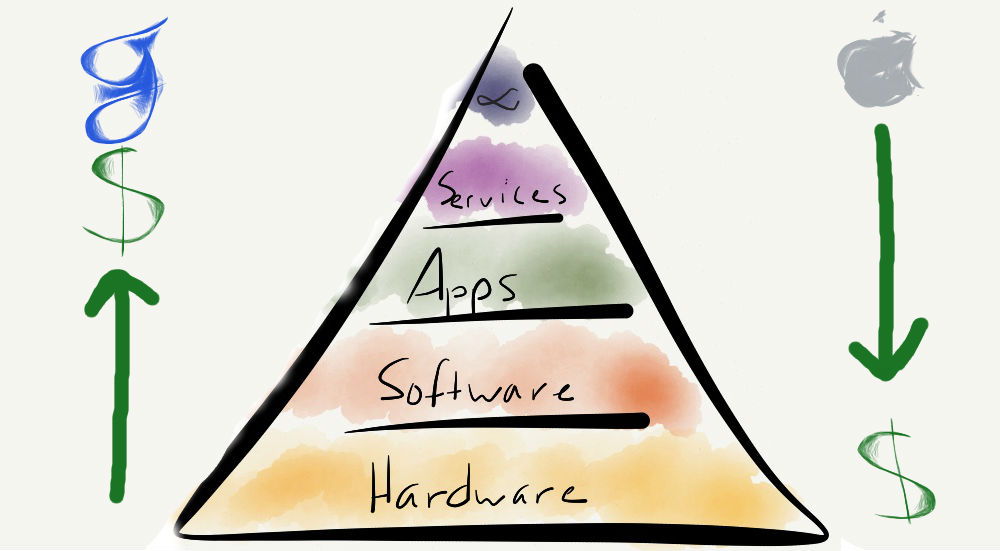
Google is at its best when its product focus follows its business model; for too long Android was a detour.
-
Is the Internet Different?
A response to a critique of Aggregation Theory, and a defense of debate on an Internet devoid of gatekeepers.
-
Tech Earnings, Google’s Earnings, Apple’s China Question
Why tech is crushing the pandemic, then a deeper dive into Google’s earnings and Apple’s issues in China.
-
United States v. Google
The Justice Department’s lawsuit against Google is appropriately narrow, and if it fails it gives a template for Congressional action.
-
Anti-Monopoly vs. Antitrust
What matters about the Congressional report on tech and antitrust is that it exists, not the specific details.
-
Amazon’s Hardware Event, Ring and Tesla, Luna
Amazon’s Alexa event was notable for how little it featured Amazon; perhaps that is why Tesla and Apple appear to be partners. Plus, the Luna gaming service.
-
Widgetsmith, Apple’s Curation, Google’s Reported Clampdown
The story of Widgetsmith, why Apple doesn’t have to worry about curation, and why Google is happy to follow along.