

-
OpenAI and Nvidia are both under threat from Google; I like OpenAI’s chances best, but they need an advertising model to beat Google as an Aggregator.
-
Google Cloud Next 2024 was Google’s most impressive assertion yet that it has the AI scale advantage and is determined to use it.
-
Google could do more than just win the chatbot war: it is the one company that could make a universal assistant. The question is if the company is willing to risk it all.
-
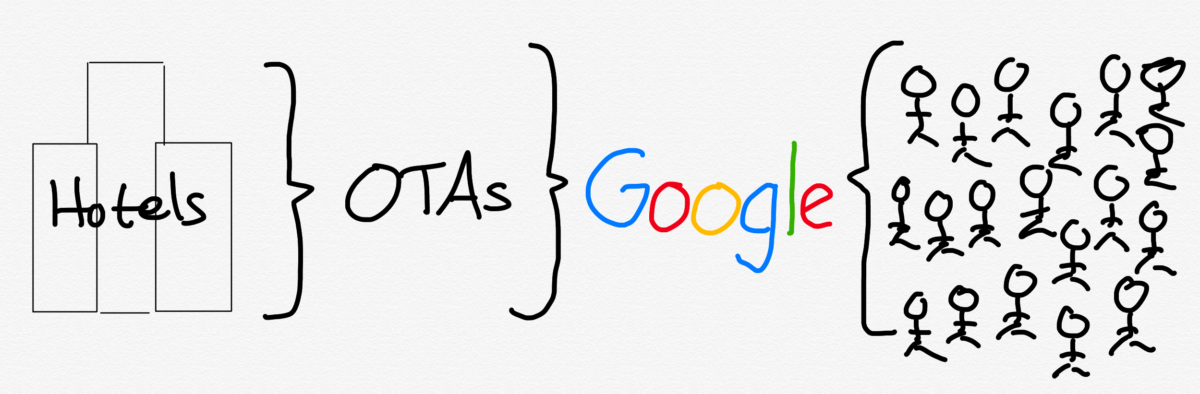
Google, the real Aggregator, is squeezing OTAs, which acted like Aggregators while depending on Google for demand. It’s easy to say Google is being unfair, but this may be better for consumers.
-
Google is unique in that their business was built on being the best. The company, though, benefited from the open web. That is not the case in mobile.
-
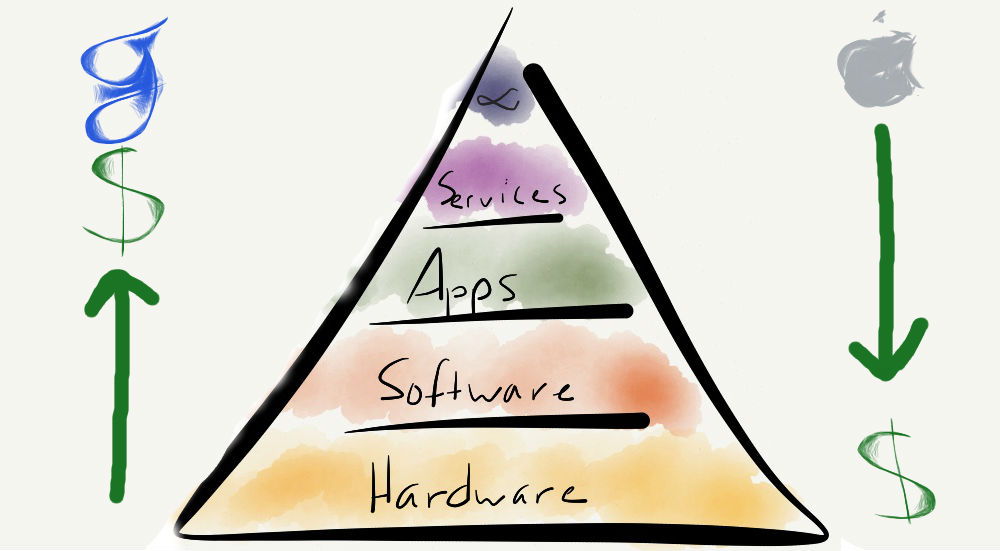
Google is at its best when its product focus follows its business model; for too long Android was a detour.
-
Chromebooks and the Cost of Complexity
While there is a question of degree, it seems quite certain that Chromebooks had a pretty good 2013. Many are attributing this to price – most Chromebooks cost $300 or less – and they’re almost certainly right. It seems like yet another case of disruption: a cheaper, inferior product enters the market against a competitor […]
-
HTC’s – and Windows Phone’s – Missing Market
According to Digitimes, HTC won’t use the top-of-the-line Qualcomm processor in their new phablet: HTC reportedly will adopt an old Qualcomm processor, the quad-core 1.7GHz Snapdragon S4 Pro APQ 8064, for production of its first large-size HTC One Max to be launched in October 2013, according to sources in the supply chain. Some sources said […]
-
Another Nokia Explanation; The Same Tragic Conclusion
While I remain convinced that Microsoft’s Nokia acquisition was largely driven by fear of losing Nokia as an OEM, either to Android or bankruptcy, there is something else curious about the timing. (The following scenario is conjecture, but not the analysis that follows) ValueAct, who is opposed to Microsoft’s push into devices, was dissuaded from […]
-
In Chrome Versus Android, Chrome Wins
John Gruber: So this is weird. Back when Chromecast was announced, I wrote that it doesn’t do something that Google made it seem like it did — stream video directly from your phone (or tablet) like AirPlay. But then it ends up it was capable of something like AirPlay, but it required a third-party app, […]
-
Understanding Google
The surest route to befuddlement in the tech industry is comparing a vertical player, like Apple, with a horizontal one, like Google. Vertical players typically monetize through hardware, only serve a subset of users, and any services they provide are exclusive to their devices. Horizontal players, on the other hand, monetize through subscriptions or ads, […]
-
The Dropbox Opportunity
Benedict Evans, in Glass, Home and solipsism, one of the most insightful posts I’ve read in some time: Your customers’ relationships with you are the only relationships you have as a business and you think a lot about them. But you’re one of a thousand things your customer thinks about in a week, and one […]
-
Waze Winners and Losers
Google acquired Waze earlier this week for a reported $1.03 billion. This is an interesting deal for a few different reasons with a clear set of winners and losers. Big Winner: Waze This is an incredible exit for a company with only ~17 million active users and negligible revenues. Waze is a great product – […]
-
Why TV Has Resisted Disruption
The structure of the TV businesses and exclusive content has helped the industry escape disruption. For now.
-
Yahoo, Tumblr, and the Signal-to-ads Cycle
Tumblr is worth far more to Yahoo than $1.1 billion, and worth far less as a standalone company. That makes this acquisition a win-win; Yahoo is buying three important parts of the signal-to-ads cycle, and Tumblr’s investors are getting a nice exit. There are three ways to improve advertising revenue: Sell more ads Sell more […]
-
The Android Detour
Google is at its best when its product focus follows its business model; for too long Android was a detour.