

Owning Customer Relationship
Companies that win in the Internet era do so by owning the customer relationship, which gives them power over suppliers.
-
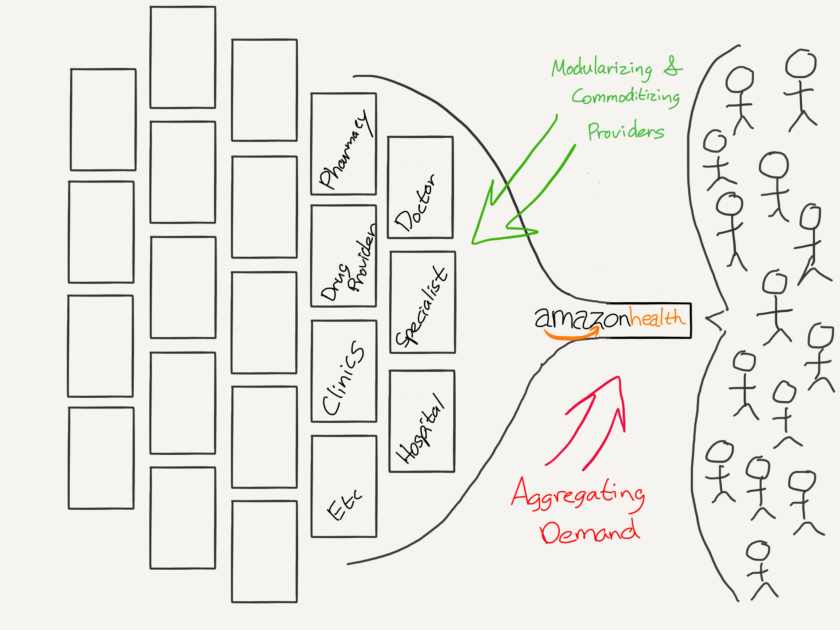
Amazon Health doesn’t seem like much now, but there are hints it could be the ultimate application of Aggregation Theory.
-
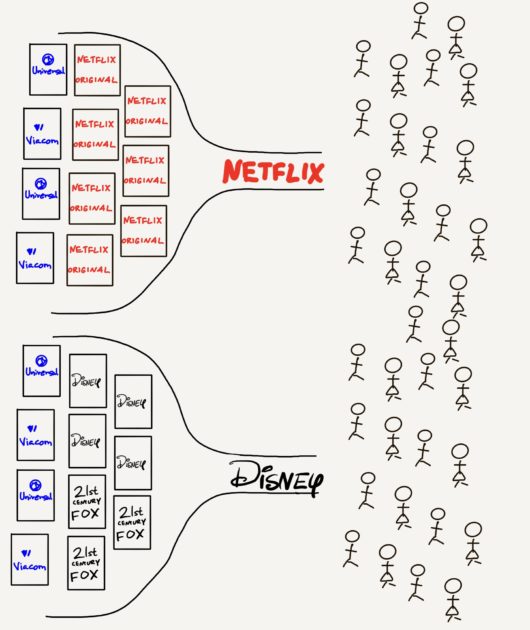
Disney’s rumored acquisition of 21st Century Fox is all about competing with Netflix; whether or not that is a good thing depends on your frame of reference.
-
The Internet has removed scarcity, meaning business models based on controlling distribution are no longer viable. Instead, the key to success is controlling access to the best customers — and that means being the best.
-
More Spotify; Spotify, Uber, and Airbnb; Uber, Waymo, and SoftBank
A bit more on Spotify, and then the lessons to be learned by Uber and Spotify. Plus, a potential Uber-Waymo partnership, and why they company will likely sell-out in Southeast Asia.
-
Could Spotify Be Netflix?, Calculating Spotify’s LTV and CAC
Spotify is in a much weaker position that Netflix was, because it could not build up a user base before negotiating with its suppliers. However, the company does seem to be acquiring customers efficiently.
-
Lessons From Spotify
Spotify has a marginal cost problem, but while the cause is unique to Spotify, the challenges are more applicable than it seems.
-
The Aggregator Paradox
Google is winning with AMP and blocking ads in Chrome: both seem bad, but aren’t they actually good for consumers? That is the paradox of aggregation.
-
Amazon Health
Amazon Health doesn’t seem like much now, but there are hints it could be the ultimate application of Aggregation Theory.
-
Amazon Go and the Future
Amazon Go exemplifies how Amazon is building its monopoly in three ways: horizontally, vertically, and financially. Plus, why automation is worth being optimistic about.
-
AT&T Pulls Out of Huawei Deal, Apple’s Other China Problem, YouTube’s Logan Paul Decision
AT&T skipped out on its deal with Huawei, reportedly under political pressure. Expect more tech issues between the U.S. and China, and Apple has the most to lose.
-
Disney-Fox Deal Announced, Horizontal Antitrust, Whither Hulu
The Disney-21st Century Fox deal is official, and the antitrust questions continue to loom large: there are clear issues with regards to a horizontal merger, but is having a vertical competitor to Netflix worth it?
-
Disney and Fox
Disney’s rumored acquisition of 21st Century Fox is all about competing with Netflix; whether or not that is a good thing depends on your frame of reference.