

Smiling Curve
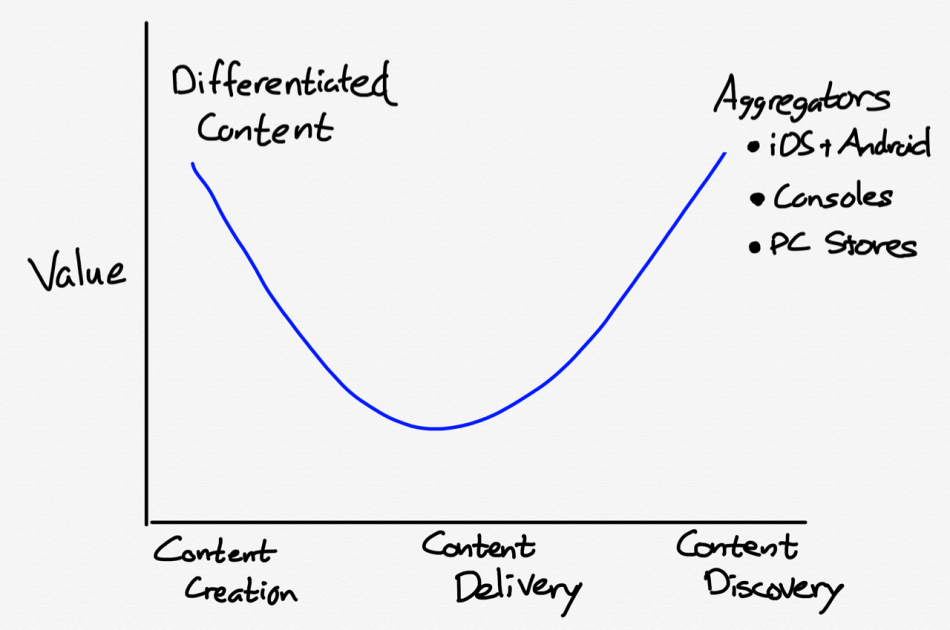
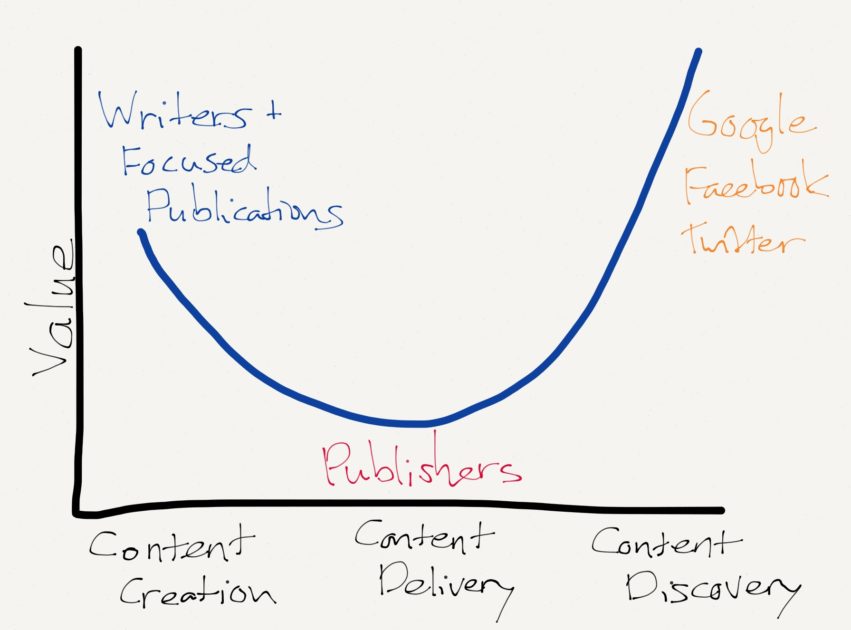
The Smiling Curve, originally created to explain the PC market, is one of the best frameworks to understand how the Internet is transforming industries, especially publishing.
-
The spate of recent acquisitions in the gaming space — Take-Two and Zynga, Microsoft and Activision, and Sony and Bungie — make sense in the context of the Smiling Curve.
-
The implication of the Smiling Curve is not only that aggregators have increased economic power, but that differentiated suppliers do as well; Omni Software is an example.
-
Publishers used to live at the point of integration. The value of that integration, though, is gone with the Internet, which means value flows to suppliers and aggregators.
-
AWS:reInvent, Serverless and the Smiling Curve, AI Services
The opening keynote at AWS:reInvent was about serverless, which is a technical manifestation of how the Internet leads to smiling curves. Plus, AWS’s CEO comments on OpenAI.
-
Gaming the Smiling Curve
The spate of recent acquisitions in the gaming space — Take-Two and Zynga, Microsoft and Activision, and Sony and Bungie — make sense in the context of the Smiling Curve.
-
Spotify’s Earnings; Spotify’s Podcast Payoff; Universal, Taylor Swift, and Internet Power
Spotify’s earnings show that their strategy is working exactly as predicted; then, Universal is responding to Taylor Swift’s leveraging of Internet power.
-
Antitrust Politics
Analyzing the politics of the antitrust hearing featuring the CEOs of Apple, Amazon, Google, and Facebook.
-
Xiaomi IPOs, Samsung’s Profit Slips, The Smiling Curve
Xiaomi’s IPO shows a company that has come full circle but still has a long ways to go. Then, Samsung remains reliant on components for profit, and both companies show that the Smiling Curve applies to smartphones more than ever.
-
Intel, Mobileye, and Smiling Curves
Intel is buying Mobileye; it’s an acquisition that makes sense once you realize how much value there is in components.