

The Future
To figure out the future, first understand the structures being built — and destroyed — today.
-
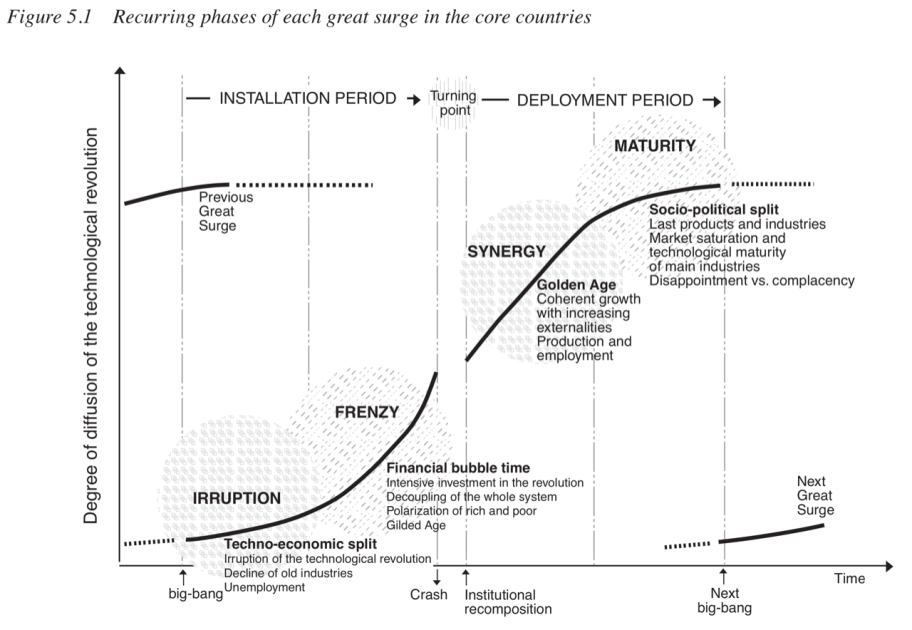
Carlota Perez documents technological revolutions, and thinks we’re in the middle of the current one; what, though, if we are nearing its maturation? Is crypto next?
-
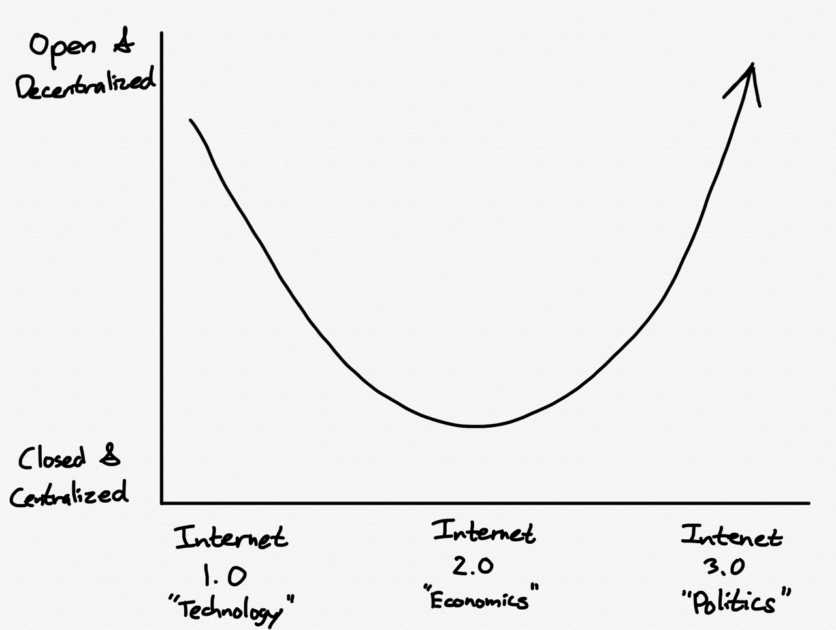
The actions taken by Big Tech have a resonance that goes beyond the context of domestic U.S. politics. Even if they were right, they will still push the world to Internet 3.0.
-
Amazon Go exemplifies how Amazon is building its monopoly in three ways: horizontally, vertically, and financially. Plus, why automation is worth being optimistic about.
-
We have likely reached Peak iPhone, and if not, it’s only a matter of time; physical goods can only scale so far. The future, thanks to the Internet, is everything-as-a-service

-
Google I/O and the Coming AI Battles
Google A/I suggests that AI is a sustaining innovation for all of Big Tech; that means the real battle will be between incumbents and Big Tech on one side, and open source on the other.
-
AI, NIL, and Zero Trust Authenticity
AI-generated content is not going to harm those with the capability of breaking through: it will make them stronger, aided by Zero Trust Authenticity
-
ChatGPT Gets a Computer
It’s possible that large language models are more like the human brain than we thought, given that it is about prediction; that is why ChatGPT needs its own computer in the form of plug-ins.
-
From Bing to Sydney
More on Bing, particularly the Sydney personality undergirding it: interacting with Sydney has made me completely rethink what conversational AI is important for.
-
An Interview with Daniel Gross and Nat Friedman about ChatGPT and the Near-Term Future of AI
An interview with Daniel Gross and Nat Friedman about ChatGPT and the near-term future of AI, Apple’s huge opportunity, the importance of bias, and the GPU paradox.
-
An Interview with Gregory C. Allen About the Past, Present, and Future of the China Chip Ban
An interview with Gregory C. Allen about the Biden administrations China chip export controls, plus the broader historical context of U.S.-China relations, the history of Silicon Valley and the U.S. military, and the factors that drove the globalization of chips in the first place