

Politics
Tech is increasingly impacting politics; it is only a matter of time before politics starts impacting tech.
-
Facebook’s political problems stem directly from its size and drive for growth; they are societal issues, not antitrust ones.
-
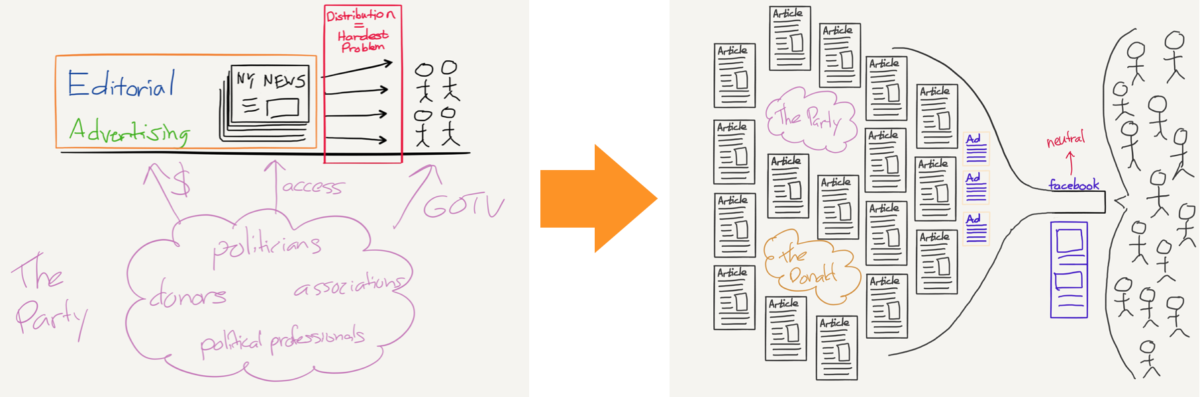
An apolitical analysis of what is happening in U.S. politics through the lens of Aggregation Theory
-
Donald Trump is the President-Elect, Tech Under Trump, The Big Picture
Donald Trump is the president-elect, and the temptation is to reduce his success to black-and-white issues. That would be a mistake for the tech industry in particular.
-
Follow-up: Governments’ Focus, Elizabeth Warren’s Speech on Competition, Facebook Changes the News Feed
One more follow-up to Tuesday’s Weekly Article, then why I don’t necessarily disagree with calls to regulate big platform players. Then, Facebook has changed the news feed, and while there will be an impact on media companies, the bigger news is what this says about Facebook.
-
The Brexit Possibility
Brexit’s downsides are clear; might tech help realize upsides in building something new based on a new world order?
-
Google v Oracle, Round 3; FTC Re-Opening Google Search Investigation?; Facebook and Filter Bubbles
Google v Oracle Round 3 kicked off this week, and the stakes are high. We need a legislative solution that probably isn’t coming. Then, the FTC may be investigating Google again, but it’s hard to see their conclusion changing; and why Facebook’s study about polarization didn’t exonerate the News Feed algorithm
-
Defending Facebook, Amazon Video Direct
The actual details of the Facebook Trending News scandal probably don’t warrant the outrage; what is more interesting is how Facebook found itself in hot water. Then, Amazon Video Direct is very interesting, but not because it’s going to be a YouTube competitor anytime soon.
-
The Real Problem With Facebook and the News
Facebook is receiving a lot of criticism for allegedly interfering with conservative topics when it comes to “Trending News”. In fact, though, the polarization reinforced by an engagement-driven feed is a much bigger concern.
-
The Voters Decide
An apolitical analysis of what is happening in U.S. politics through the lens of Aggregation Theory