

Aggregation Theory
Aggregation Theory provides a framework to understand the impact of the Internet on nearly all industries.
-
Zillow fits the description of an aggregator, but it hasn’t transformed its industry due to a lack of integration. Now it is trying to do exactly that.
-
Facebook is in trouble — again — for Russian ads about the election; figuring out how to deal with them requires first understanding that Facebook, like Google, is a Super-Aggregator. It faces zero transaction costs…
-
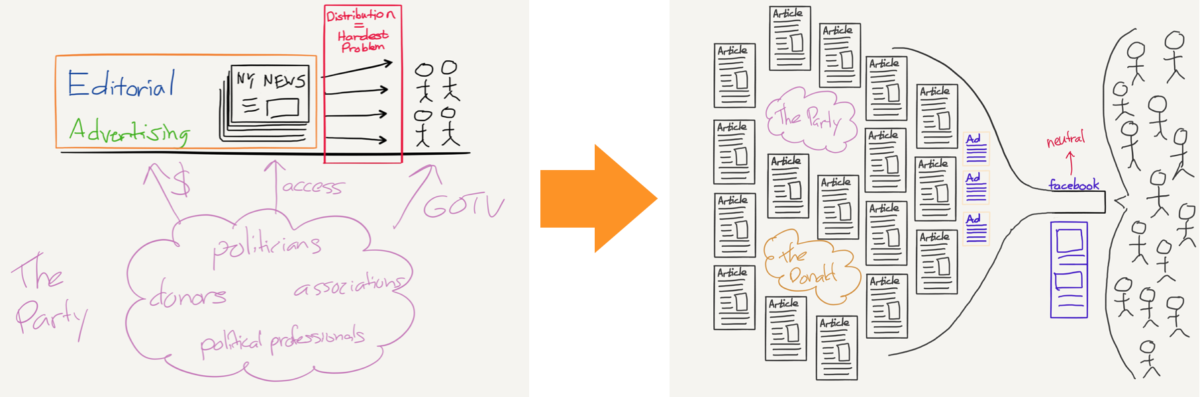
An apolitical analysis of what is happening in U.S. politics through the lens of Aggregation Theory
-
The FANG companies — Facebook, Amazon, Netflix, and Google — are far more similar than you might think. Their rise in value is no accident, and it is connected to Aggregation Theory.
-
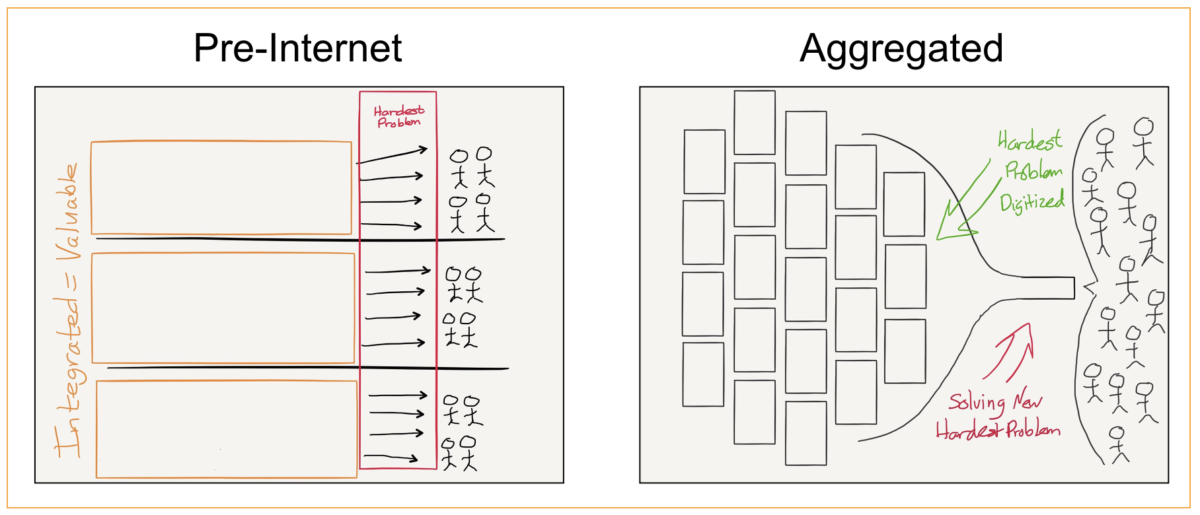
The disruption caused by the Internet in industry after industry has a common theoretical basis described by Aggregation Theory.

-
The Anti-Amazon Alliance
Google Shopping is changing its model, suggesting Google is joining the Anti-Amazon Alliance; 3rd-party merchants should do the same.
-
How Tech Can Build
Marc Andreessen has written (another) seminal essay: It’s Time to Build. What does that mean for tech and venture capital?
-
The NBA and Microsoft, and An Interview with Adam Silver and Satya Nadella
Microsoft and the NBA are announcing a new partnership; then, an interview NBA Commissioner Adam Silver and Microsoft CEO Satya Nadella
-
Amazon Cuts Affiliate Marketing, Google Versus French Publishers, Streaming Services and Movies
Amazon cutting affiliate fees, Google versus French publishers, and movie studios seeking to sell to Netflix are all examples of the same trend: you must own your relationship with your customers.
-
Coronavirus Clarity
The coronavirus crisis is making clear just how powerful tech companies are; hopefully this leads to a much more productive conversation about how that power should be utilized or regulated.
-
An Interview with Okta CEO Todd McKinnon (and Slack correction)
An interview with Okta CEO Todd McKinnon about Okta’s moat, holding a virtual developer conference, and the Okta platform.
-
Apple, Amazon, and Common Enemies
It is tempting — and useful — to look at Apple and Amazon’s deal in a bilateral context. It probably makes more sense, though, in the context of Netflix and the future of video.
-
Studios Go Direct to Consumer, Theaters and Demand, Universal Versus Disney
Studios go direct-to-consumer out of necessity; Disney has the most potential, even if they should use Universal’s model.
-
Email Addresses and Razor Blades
The fate of Harry’s and other DTC companies, particularly relative to companies like Credit Karma, highlight how the Internet elevates the importance of demand over supply.