

Owning Customer Relationship
Companies that win in the Internet era do so by owning the customer relationship, which gives them power over suppliers.
-
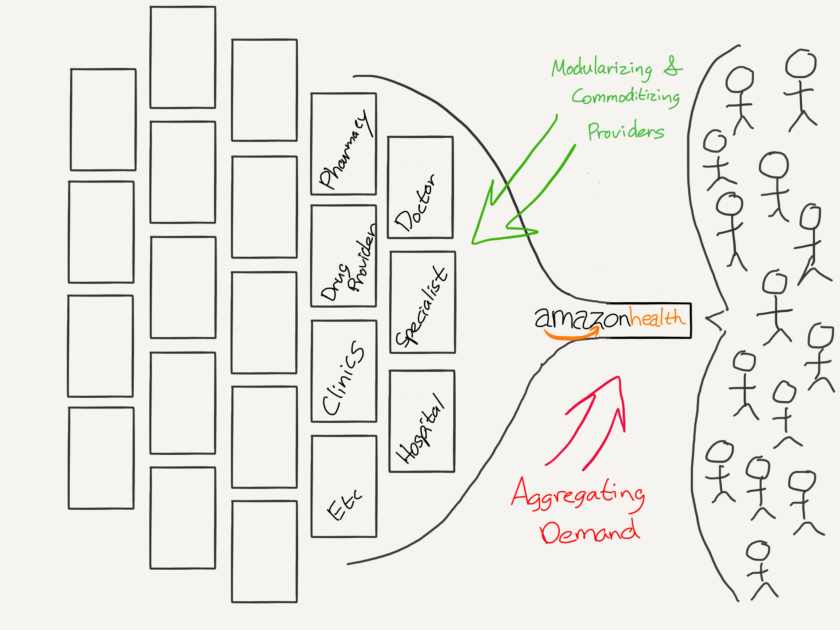
Amazon Health doesn’t seem like much now, but there are hints it could be the ultimate application of Aggregation Theory.
-
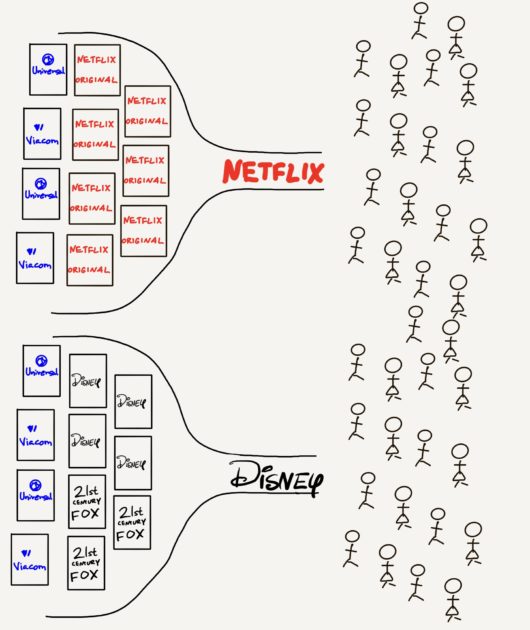
Disney’s rumored acquisition of 21st Century Fox is all about competing with Netflix; whether or not that is a good thing depends on your frame of reference.
-
The Internet has removed scarcity, meaning business models based on controlling distribution are no longer viable. Instead, the key to success is controlling access to the best customers — and that means being the best.
-
Microsoft and Apple Double Down
Both Microsoft and Apple made news yesterday, and while one was unexpected and the other predictable, both are effectively doubling down on their strategies. And both may not matter.
-
Google’s Go-to-Market Gap
Google is unique in that their business was built on being the best. The company, though, benefited from the open web. That is not the case in mobile.
-
Antitrust and Aggregation
The European Commission’s antitrust case against Google is likely to be the first of many against aggregators, because the end game of Aggregation Theory is monopoly.
-
The Voters Decide
An apolitical analysis of what is happening in U.S. politics through the lens of Aggregation Theory
-
The FANG Playbook
The FANG companies — Facebook, Amazon, Netflix, and Google — are far more similar than you might think. Their rise in value is no accident, and it is connected to Aggregation Theory.
-
Netflix Goes Global, iPhone Worry
Netflix’s surprising announcement that the company was extending its service to nearly every country on earth was impressive in its execution, what it said about the company’s strategy, and it raised interesting points about Aggregation Theory and Netflix’s future opportunities. Plus, there is a lot of smoke when it comes to worries about the iPhone.
-
The Anti-Uber Alliance, WeChat Blocks Uber, Tiger Capital Invests in Uber
Didi Kuaidi, Ola, GrabTaxi, and Lyft are teaming up against Uber. Most are focused on Lyft, but they’re the least interesting part of this deal. Meanwhile, why is anyone surprised that Tencent would compete “unfairly”, plus, Tiger Capital hedges its bets.
-
Beyond Disruption
Clayton Christensen claims that Uber is not disruptive, and he’s exactly right. In fact, disruption theory often doesn’t make sense when it comes to understanding how companies succeed in the age of the Internet.
-
Marriott Acquires Starwood, Online Travel Agents and Aggregation, Surviving as an Incumbent
The impact of the Internet continues to reverberate: in this case, there is a clear link between Aggregation Theory and the tie-up between Marriott and Starwood.