

-
Facebook’s political problems stem directly from its size and drive for growth; they are societal issues, not antitrust ones.
-
Facebook is under pressure from all sides, but that actually means it has an opportunity to build the platform it has always wanted — in digital ads.
-
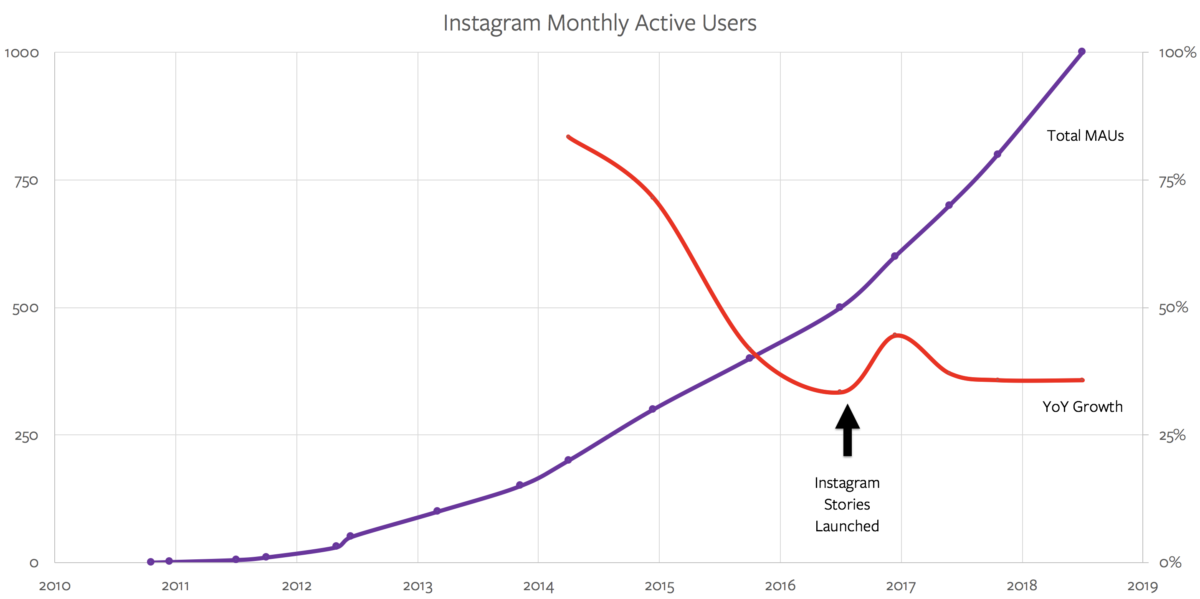
Snapchat is losing users, and it seems clear the biggest reason is Instagram Stories: that is a win for Facebook, but the pain in advertising may be substantial.
-
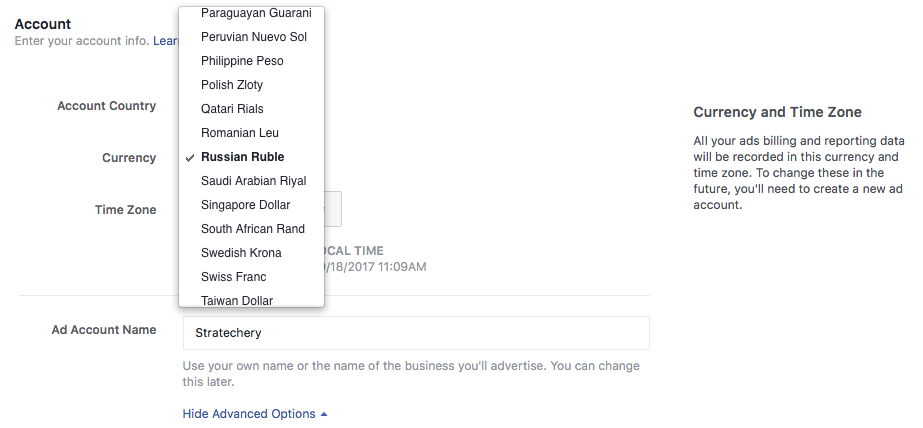
Facebook is in trouble — again — for Russian ads about the election; figuring out how to deal with them requires first understanding that Facebook, like Google, is a Super-Aggregator. It faces zero transaction costs…
-
Facebook gave one of the worst keynotes in a long time: there was no vision, just the adoption of Snap’s. It’s the inevitable outcome of a monopoly.
-
Facebook has long had too much power, but Mark Zuckerberg’s expressed willingness to use said power for political ends means it’s time to consider countermeasures.
-
The Bill Gates Line
Understanding the differences between aggregators and platforms matters for companies interacting with them and also regulators considering antitrust.
-
The Moat Map Follow-up; Uber, YouTube, and Spotify; The Public Cloud and Scale
More on The Moat Map, and how it applies to Uber, YouTube, Spotify and the public cloud.
-
Platforms Versus Aggregators, What About Amazon?, Walmart Buys Flipkart
Tech’s two philosophies are also about the difference between platforms and aggregators, but even that has its own divisions. Amazon falls on both sides of the divide. Plus, why Walmart’s Flipkart purchase makes no sense.
-
Tech’s Two Philosophies
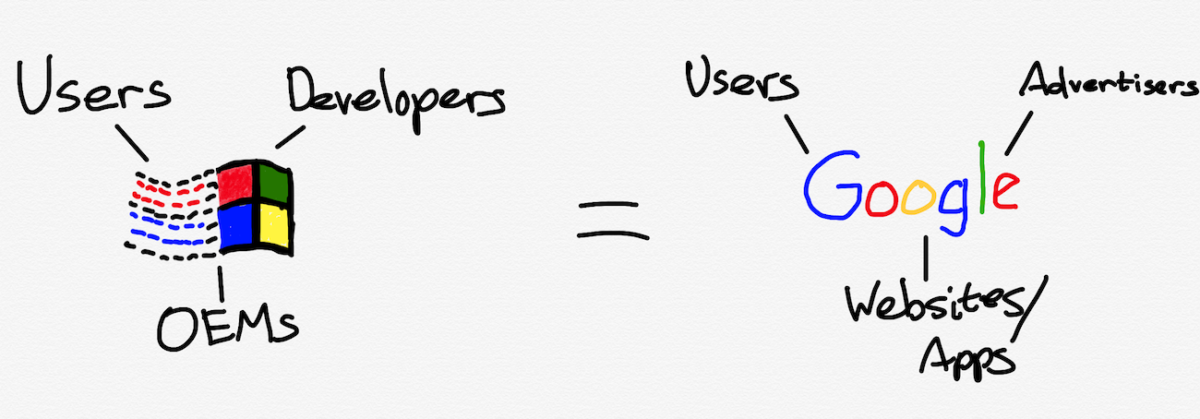
Google and Facebook represent one philosophy, and Microsoft and Apple represent another; tech needs both, but ultimately platforms are more important than aggregators.
-
Divine Discontent: Disruption’s Antidote
Apple has long defeated disruption by focusing on the user experience; Jeff Bezos and Amazon, though, show that user expectations for their experience are ever-changing.
-
Zuckerberg’s House Hearing, Toutiao’s Apology, Apple’s Siri Hire
Facebook CEO Mark Zuckerberg was back on the hill, using his usual talking points; the contrast with a Chinese news app, facing its own political pressure, was striking. Plus, why Apple’s Siri hire is so important.