

Owning Customer Relationship
Companies that win in the Internet era do so by owning the customer relationship, which gives them power over suppliers.
-
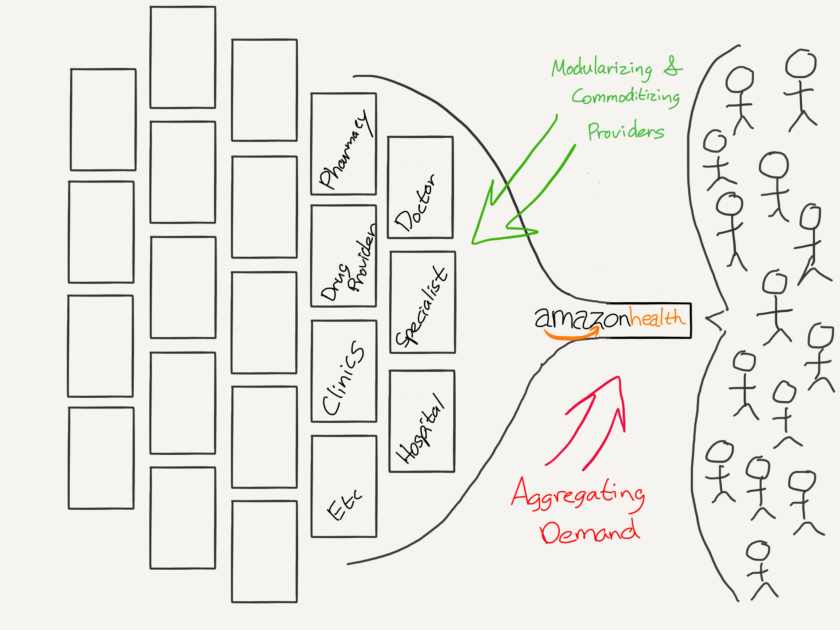
Amazon Health doesn’t seem like much now, but there are hints it could be the ultimate application of Aggregation Theory.
-
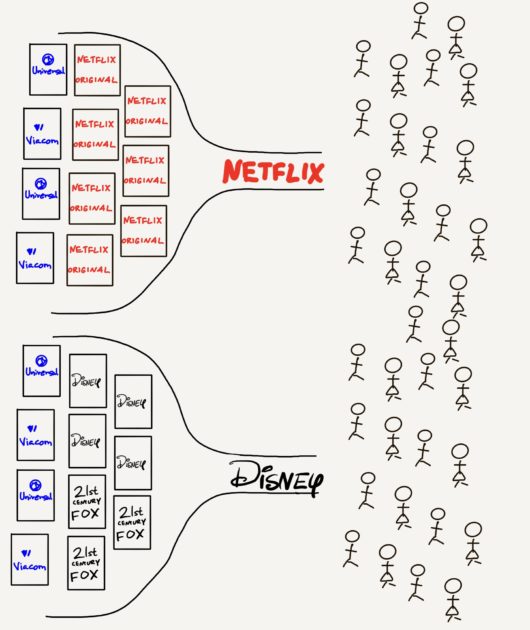
Disney’s rumored acquisition of 21st Century Fox is all about competing with Netflix; whether or not that is a good thing depends on your frame of reference.
-
The Internet has removed scarcity, meaning business models based on controlling distribution are no longer viable. Instead, the key to success is controlling access to the best customers — and that means being the best.
-
Google Fights Back
At Google I/O, Google was the opposite of defensive: the company set out to make the case that its approach made for better products that makes people’s lives better
-
Disney and the Future of TV
TV is moving from a world where distribution dictates business models to one where business models need to fit the jobs consumers want done. That is the best way to understand Disney’s latest announcement.
-
Where Warren’s Wrong Follow-up, Amazon’s Price Parity Provision, The Amazon Marketplace Question
More on Senator Warren’s tech antitrust proposal, why regulatory focus should be on contracts, and why 3rd-parties benefit from Amazon Marketplace.
-
Zillow Changes CEOs, An Interview with Zillow CEO Rich Barton
Zillow has changed CEOs, which makes sense given the change in the company’s business model. Then, an interview with new CEO and Zillow co-founder Rich Barton.
-
The Value Chain Constraint
Companies succeed or fail not based on technology but rather according to their ability to integrate within their value chains.
-
The Cost of Apple News
Apple News is primed to offer a subscription bundle, but publishers should be wary of being Aggregated.
-
Spotify’s Podcast Aggregation Play
Spotify is making a major move into podcasts, where it appears to have clear designs to be the sort of Aggregator it cannot be when it comes to music.