

Aggregation Theory
Aggregation Theory provides a framework to understand the impact of the Internet on nearly all industries.
-
Zillow fits the description of an aggregator, but it hasn’t transformed its industry due to a lack of integration. Now it is trying to do exactly that.
-
Facebook is in trouble — again — for Russian ads about the election; figuring out how to deal with them requires first understanding that Facebook, like Google, is a Super-Aggregator. It faces zero transaction costs…
-
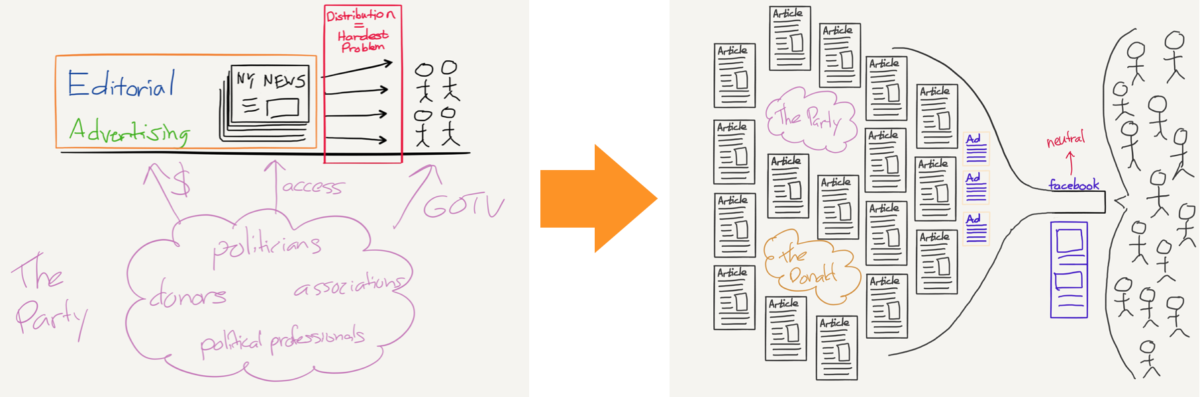
An apolitical analysis of what is happening in U.S. politics through the lens of Aggregation Theory
-
The FANG companies — Facebook, Amazon, Netflix, and Google — are far more similar than you might think. Their rise in value is no accident, and it is connected to Aggregation Theory.
-
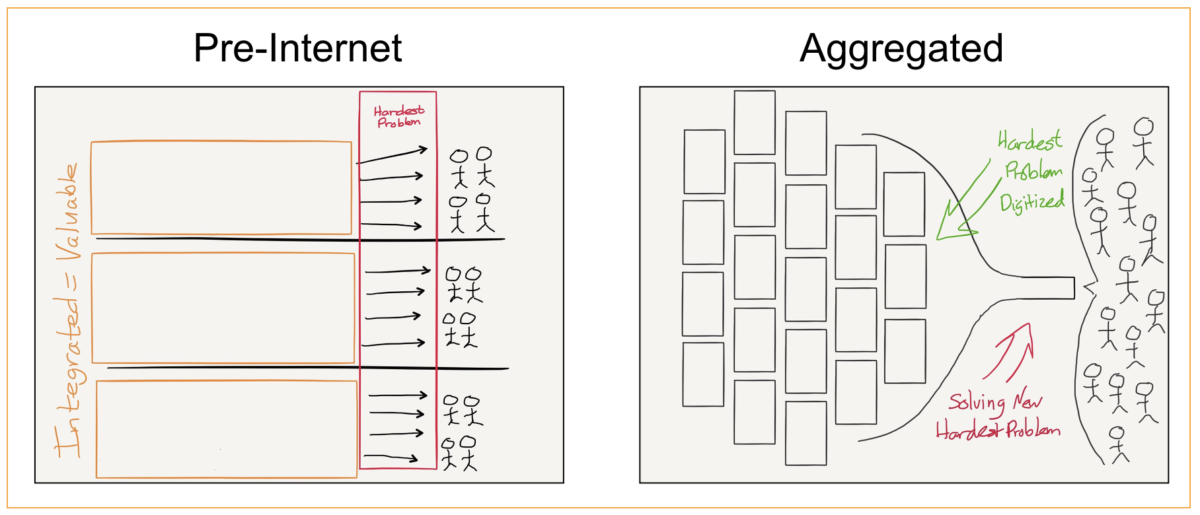
The disruption caused by the Internet in industry after industry has a common theoretical basis described by Aggregation Theory.

-
Disney’s Taylor Swift Era
Not even Taylor Swift can fight the devaluation of recorded music, but she makes it up in physical experiences; Disney isn’t much different, but it looks much worse given the company’s old business model.
-
Hollywood on Strike
The Hollywood strike is setting talent against studios, but the problem is that both are jointly threatened by the reality of the Internet and zero distribution costs.
-
Friction Follow-Up, Databricks Acquires MosaicML
More on the trade-offs (and benefits) of Amazon’s scale, and initial reactions to Databricks’ acquisition of MosaicML.
-
Amazon, Friction, and the FTC
The FTC’s Amazon complaint raises some fair points in isolation, but misses the bigger picture, both in terms of Amazon specifically and the Internet generally.
-
Podcast Grifting; Aggregator Lessons; Ostroff, Simmons, and Harry
Bill Simmons calls Harry and Meghan grifters; he seems to have a case, but the larger issue is why Spotify mistakenly thought they would be valuable in the first place.