

Aggregation Theory
Aggregation Theory provides a framework to understand the impact of the Internet on nearly all industries.
-
Zillow fits the description of an aggregator, but it hasn’t transformed its industry due to a lack of integration. Now it is trying to do exactly that.
-
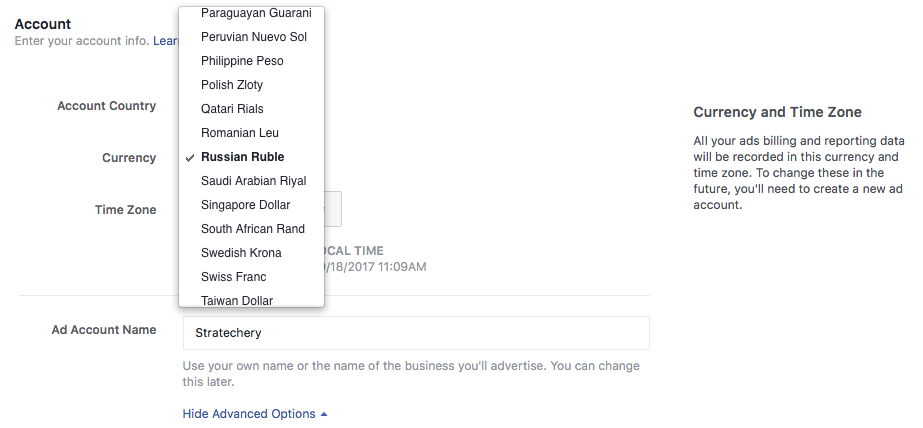
Facebook is in trouble — again — for Russian ads about the election; figuring out how to deal with them requires first understanding that Facebook, like Google, is a Super-Aggregator. It faces zero transaction costs…
-
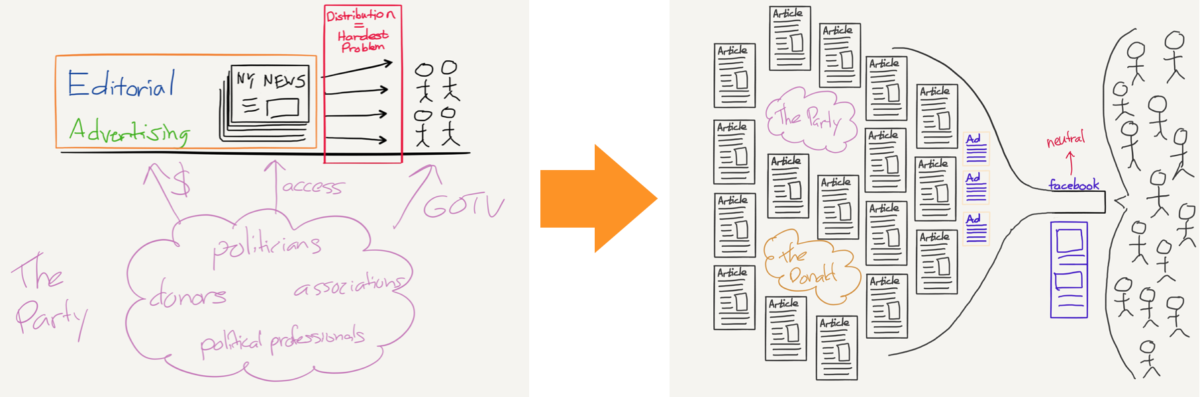
An apolitical analysis of what is happening in U.S. politics through the lens of Aggregation Theory
-
The FANG companies — Facebook, Amazon, Netflix, and Google — are far more similar than you might think. Their rise in value is no accident, and it is connected to Aggregation Theory.
-
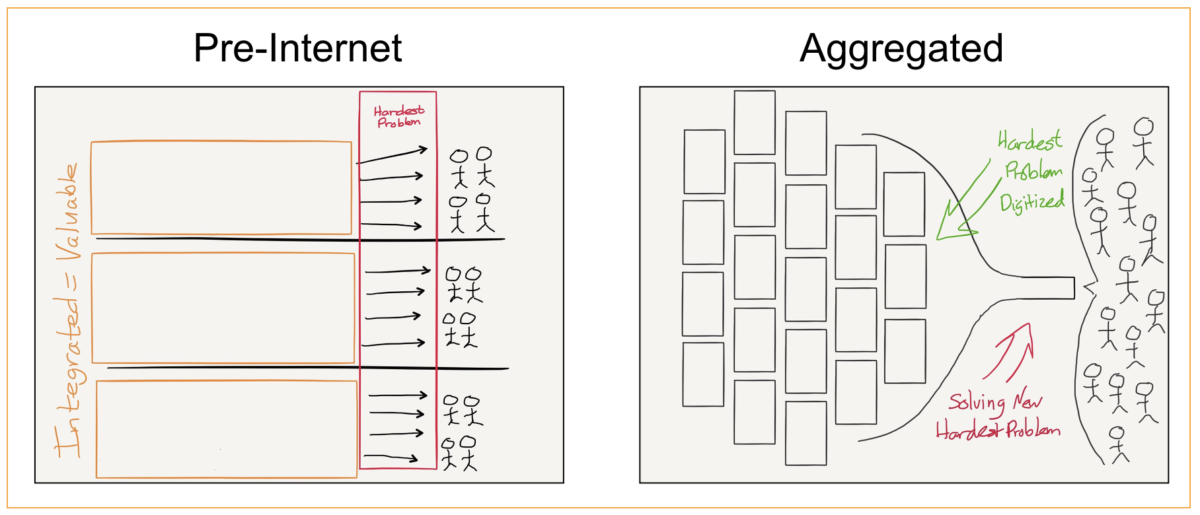
The disruption caused by the Internet in industry after industry has a common theoretical basis described by Aggregation Theory.

-
An Interview with Netflix co-CEO Greg Peters About Strategy and Execution
An interview with Netflix co-CEO Greg Peters about owning the customer relationship, Netflix culture and execution, advertising, games, and content strategy.
-
Amazon and Diamond Sports, Netflix and WWE
Amazon has made a deal with Diamond Sports and their regional networks, while Netflix has signed up WWE for its first “sports” rights content.
-
OpenAI Launches GPT Store, The Everything Engine and Advertising, Artifact Shuts Down
OpenAI opens up the GPT store, which is a clear Aggregator play. That raises the prospect of future advertising opportunities. Then,. Artifact shuts down: is the open web just too crappy?
-
Netflix’s Data Drop, Power Laws, Netflix’s Motivations
Netflix released new data about its shows, that showed the usual power law distribution; the motivation is likely to increase the amount of content it licenses.
-
AWS:reInvent, Serverless and the Smiling Curve, AI Services
The opening keynote at AWS:reInvent was about serverless, which is a technical manifestation of how the Internet leads to smiling curves. Plus, AWS’s CEO comments on OpenAI.