

Aggregation Theory
Aggregation Theory provides a framework to understand the impact of the Internet on nearly all industries.
-
Zillow fits the description of an aggregator, but it hasn’t transformed its industry due to a lack of integration. Now it is trying to do exactly that.
-
Facebook is in trouble — again — for Russian ads about the election; figuring out how to deal with them requires first understanding that Facebook, like Google, is a Super-Aggregator. It faces zero transaction costs…
-
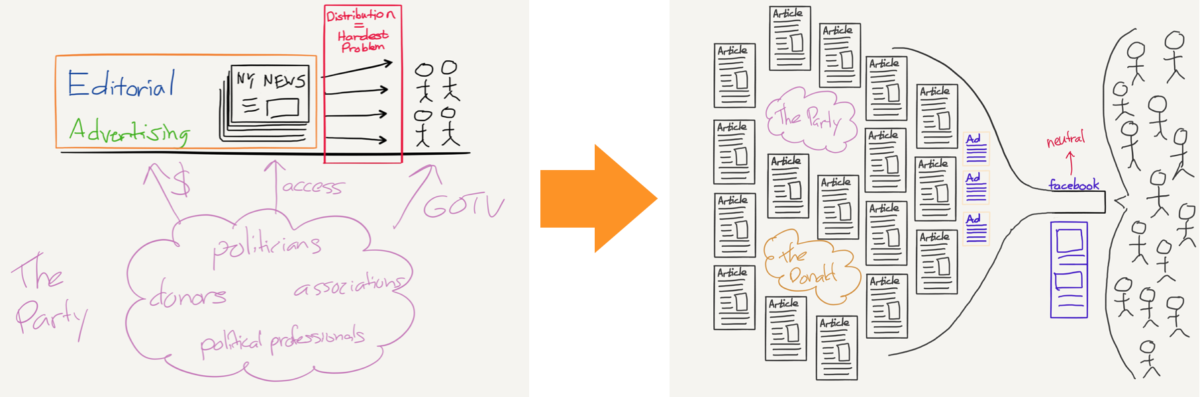
An apolitical analysis of what is happening in U.S. politics through the lens of Aggregation Theory
-
The FANG companies — Facebook, Amazon, Netflix, and Google — are far more similar than you might think. Their rise in value is no accident, and it is connected to Aggregation Theory.
-
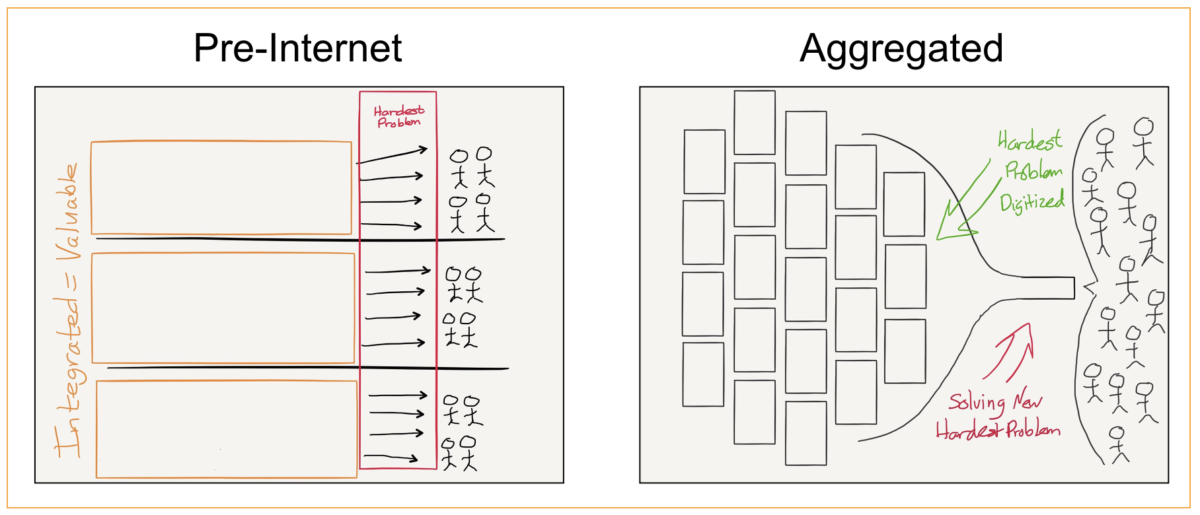
The disruption caused by the Internet in industry after industry has a common theoretical basis described by Aggregation Theory.

-
Shopify and the Power of Platforms
It is all but impossible to beat an Aggregator head-on, as Walmart is trying to do with Amazon. The solution instead is to build a platform like Shopify.
-
Netflix Loses The Office, Netflix’s Budget Consciousness, Spotify Ends Direct Uploads
It is hard to see *The Office* being a good deal for NBCUniversal, even if Netflix will miss it. Then, Netflix’s budget consciousness is just as likely to be a sign of Netflix power than it is weakness, and more reasons why Spotify isn’t Netflix.
-
Facebook, Libra, and the Long Game
Libra is less about an immediate benefit to Facebook, and more about creating a world where companies like Facebook have the best chance to prosper. That is why Facebook gave up so much control.
-
Airbnb Eliminates Guest Fees, Airbnb’s Initial Advantage, Airbnb’s Delay
Airbnb is eliminating fees for guests, a change that is both overdue and also additional evidence that the company has been moving too slowly to secure its Aggregator position.
-
The Problem with “Aggregation Theory”, Demand at Scale, Supplier Power and Value
A response to The Problem with Ben Thompson’s ‘Aggregation Theory’, and why the Internet really is different (this Daily Update is freely accessible)
-
Google Fights Back
At Google I/O, Google was the opposite of defensive: the company set out to make the case that its approach made for better products that makes people’s lives better
-
Uber Questions Follow-up, Luminary Launches, Luminary’s Broken Rung
More on why giving information to investors often helps companies, then why Luminary, a new service for podcasters, is probably not going to succeed. Building bundles is hard!
-
Disney and the Future of TV
TV is moving from a world where distribution dictates business models to one where business models need to fit the jobs consumers want done. That is the best way to understand Disney’s latest announcement.