

Aggregation Theory
Aggregation Theory provides a framework to understand the impact of the Internet on nearly all industries.
-
Zillow fits the description of an aggregator, but it hasn’t transformed its industry due to a lack of integration. Now it is trying to do exactly that.
-
Facebook is in trouble — again — for Russian ads about the election; figuring out how to deal with them requires first understanding that Facebook, like Google, is a Super-Aggregator. It faces zero transaction costs…
-
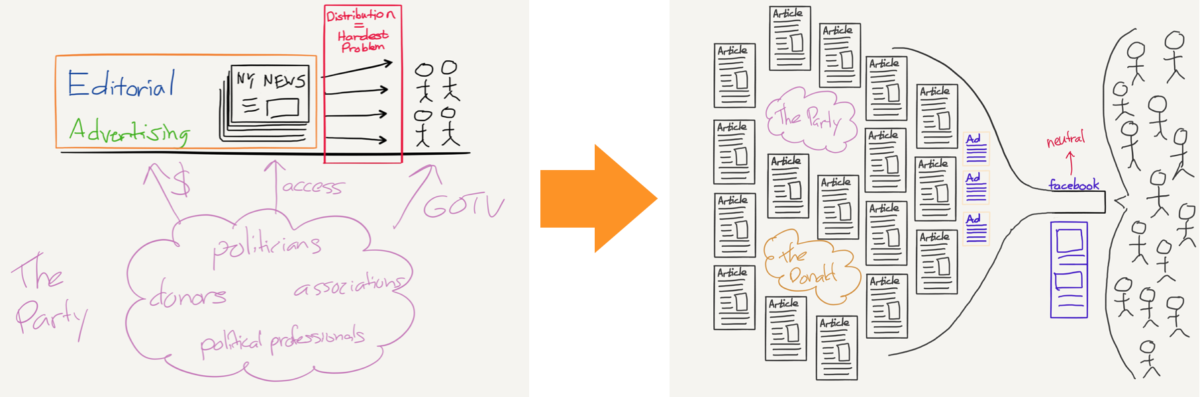
An apolitical analysis of what is happening in U.S. politics through the lens of Aggregation Theory
-
The FANG companies — Facebook, Amazon, Netflix, and Google — are far more similar than you might think. Their rise in value is no accident, and it is connected to Aggregation Theory.
-
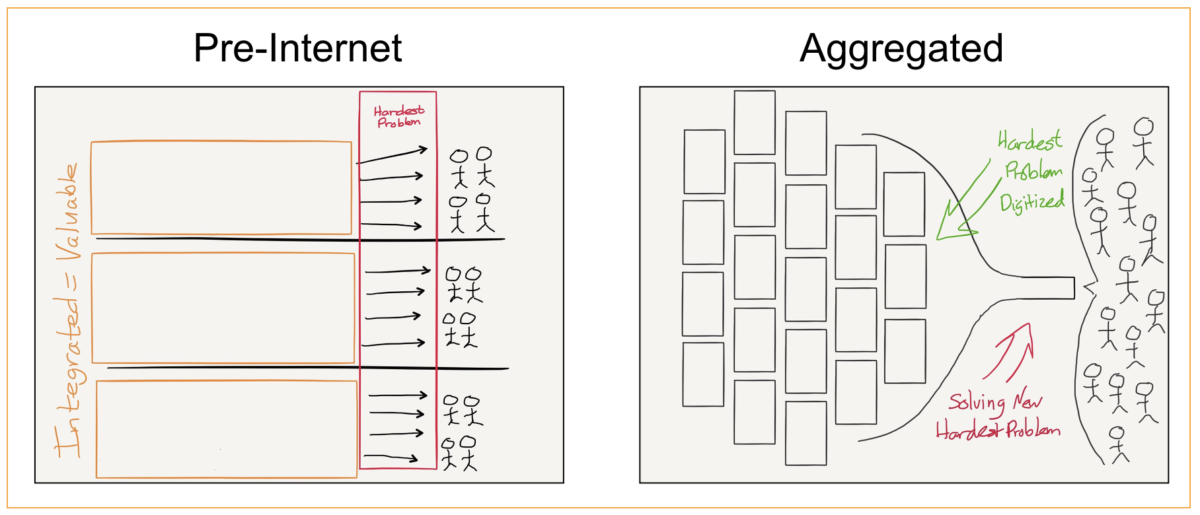
The disruption caused by the Internet in industry after industry has a common theoretical basis described by Aggregation Theory.

-
Zillow Changes CEOs, An Interview with Zillow CEO Rich Barton
Zillow has changed CEOs, which makes sense given the change in the company’s business model. Then, an interview with new CEO and Zillow co-founder Rich Barton.
-
The Value Chain Constraint
Companies succeed or fail not based on technology but rather according to their ability to integrate within their value chains.
-
Apple News Follow-up, What Direct-to-Consumer Publishers are Selling, More on Podcasts: Supporting Cast and Kimberlite
More on why Apple News is both different than Facebook, and yet similar from a publisher perspective. Then, how publishers should think about their business — and Apple News — plus two new entrants in the podcast space.
-
The Cost of Apple News
Apple News is primed to offer a subscription bundle, but publishers should be wary of being Aggregated.
-
Spotify’s Podcast Aggregation Play
Spotify is making a major move into podcasts, where it appears to have clear designs to be the sort of Aggregator it cannot be when it comes to music.
-
BuzzFeed Followup, The Future is Niche, Atlassian and Bing
BuzzFeed’s relative scale problem, and why venture capital doesn’t make sense for content, because the future is niche. Plus, important follow-up on Bing and Atlassian.
-
Netflix Flexes
Netflix is an Aggregator, with a value chain that lets it drive demand, raise prices, and dismiss competition.