

Aggregation Theory
Aggregation Theory provides a framework to understand the impact of the Internet on nearly all industries.
-
Zillow fits the description of an aggregator, but it hasn’t transformed its industry due to a lack of integration. Now it is trying to do exactly that.
-
Facebook is in trouble — again — for Russian ads about the election; figuring out how to deal with them requires first understanding that Facebook, like Google, is a Super-Aggregator. It faces zero transaction costs…
-
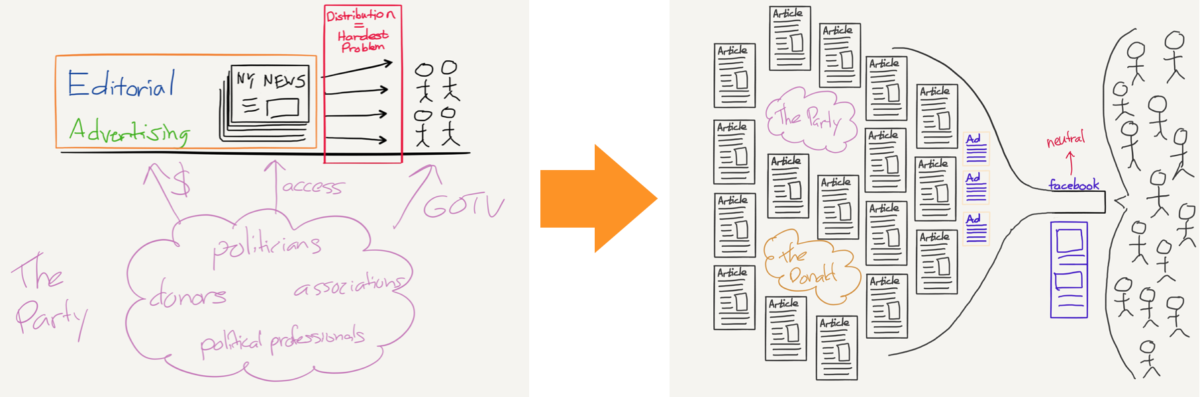
An apolitical analysis of what is happening in U.S. politics through the lens of Aggregation Theory
-
The FANG companies — Facebook, Amazon, Netflix, and Google — are far more similar than you might think. Their rise in value is no accident, and it is connected to Aggregation Theory.
-
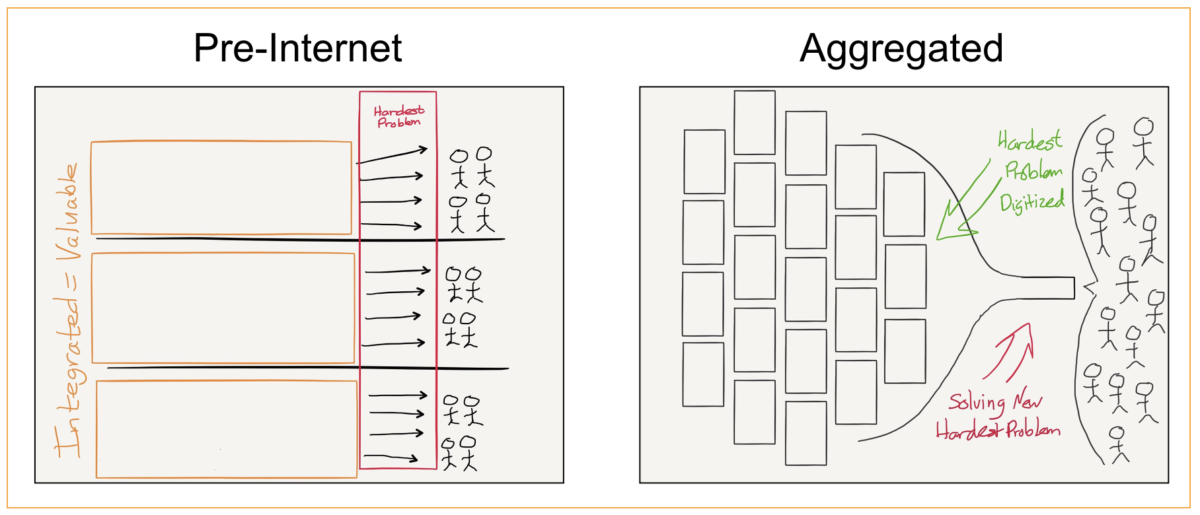
The disruption caused by the Internet in industry after industry has a common theoretical basis described by Aggregation Theory.

-
Sports Gambling Defederalized, Amazon Channels
Sports gambling is defederalized, and the opportunity is likely larger than people think: then, Amazon Channels is another manifestation of the company’s “first customer” strategy.
-
The Moat Map Follow-up; Uber, YouTube, and Spotify; The Public Cloud and Scale
More on The Moat Map, and how it applies to Uber, YouTube, Spotify and the public cloud.
-
Platforms Versus Aggregators, What About Amazon?, Walmart Buys Flipkart
Tech’s two philosophies are also about the difference between platforms and aggregators, but even that has its own divisions. Amazon falls on both sides of the divide. Plus, why Walmart’s Flipkart purchase makes no sense.
-
Tech’s Two Philosophies
Google and Facebook represent one philosophy, and Microsoft and Apple represent another; tech needs both, but ultimately platforms are more important than aggregators.
-
Netflix Earnings and the Video Value Chain, The Conditions of Aggregation, Comcast and Netflix and the New Bundle
Netflix’s earnings are a reminder of the power that comes from not just aggregation but also integration. It also reveals that Aggregators are more likely to gain economic power when suppliers are already modularized. Plus, Netflix and Comcast start to build the new bundle.
-
Zillow, Aggregation, and Integration
Zillow fits the description of an aggregator, but it hasn’t transformed its industry due to a lack of integration. Now it is trying to do exactly that.
-
Spotify Debuts; Trump, Amazon, and the USPS; The Politics of Amazon
Spotify debuts, and I really want to be bullish, but it’s hard. Then, Trump might have a point about Amazon, but it’s moot: the company should be defended.
-
Google Sells Zagat to The Infatuation, The Infatuation and Zagat, More on Google and AMP
A review of why Google bought Zagat, what The Infatuation might do with the review site, and the parallels with the AMP project.