

Aggregation Theory
Aggregation Theory provides a framework to understand the impact of the Internet on nearly all industries.
-
Zillow fits the description of an aggregator, but it hasn’t transformed its industry due to a lack of integration. Now it is trying to do exactly that.
-
Facebook is in trouble — again — for Russian ads about the election; figuring out how to deal with them requires first understanding that Facebook, like Google, is a Super-Aggregator. It faces zero transaction costs…
-
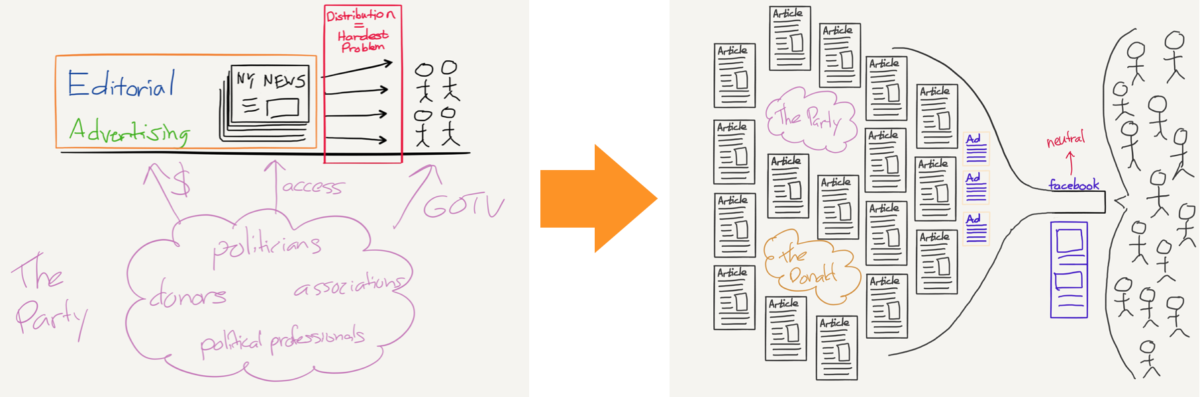
An apolitical analysis of what is happening in U.S. politics through the lens of Aggregation Theory
-
The FANG companies — Facebook, Amazon, Netflix, and Google — are far more similar than you might think. Their rise in value is no accident, and it is connected to Aggregation Theory.
-
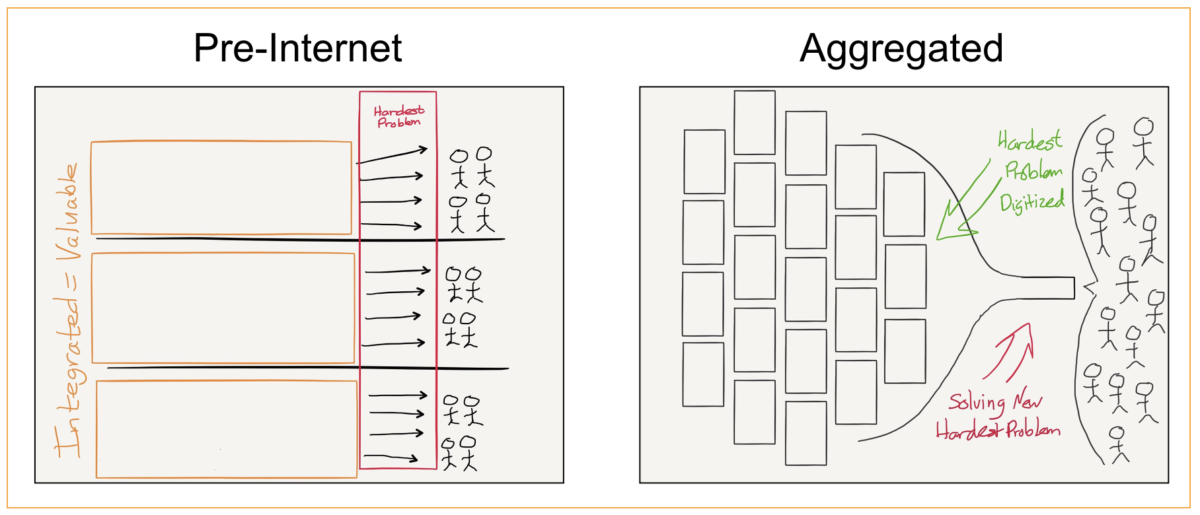
The disruption caused by the Internet in industry after industry has a common theoretical basis described by Aggregation Theory.

-
Gatekeepers Follow-Up, Hollywood and Venture Capital, The New York Times versus Tech
The removal of Gatekeepers should not drive the demand for new ones; then, why venture capital has a lot in common with Hollywood, which should serve as a warning. Finally, a reminder, courtesy of the New York Times, of why the Fake News campaign is dangerous.
-
Goodbye Gatekeepers
Harvey Weinstein was a gate-keeper — a position that existed in multiple industries, including the media. That entire structure, though, is untenable on the Internet, and that’s a good thing.
-
Airbnb Reportedly Building Apartments, Apple Hires New General Counsel, Uber’s Board Saga Ends
Catching up on a story that intrigues (Airbnb), a story that raises eyebrows (Apple), and another that seems to have finally reached its conclusion (Uber’s board disfunction)
-
Google’s Search for the Sweet Spot
Google’s hardware event shows the company’s commitment both to devices and to artificial intelligence; just doing what you are good at, though, is not always enough.
-
Roku’s IPO and Origin Story, Netflix Versus Roku and the Conservation of Attractive Profits, “Weak” Aggregators
Roku’s origin story explain Netflix’s strategic acumen — which, by extension, explains why Roku is a risky bet. Then, Roku explains “weak” aggregators, that aren’t really aggregators at all.