

Aggregation Theory
Aggregation Theory provides a framework to understand the impact of the Internet on nearly all industries.
-
Zillow fits the description of an aggregator, but it hasn’t transformed its industry due to a lack of integration. Now it is trying to do exactly that.
-
Facebook is in trouble — again — for Russian ads about the election; figuring out how to deal with them requires first understanding that Facebook, like Google, is a Super-Aggregator. It faces zero transaction costs…
-
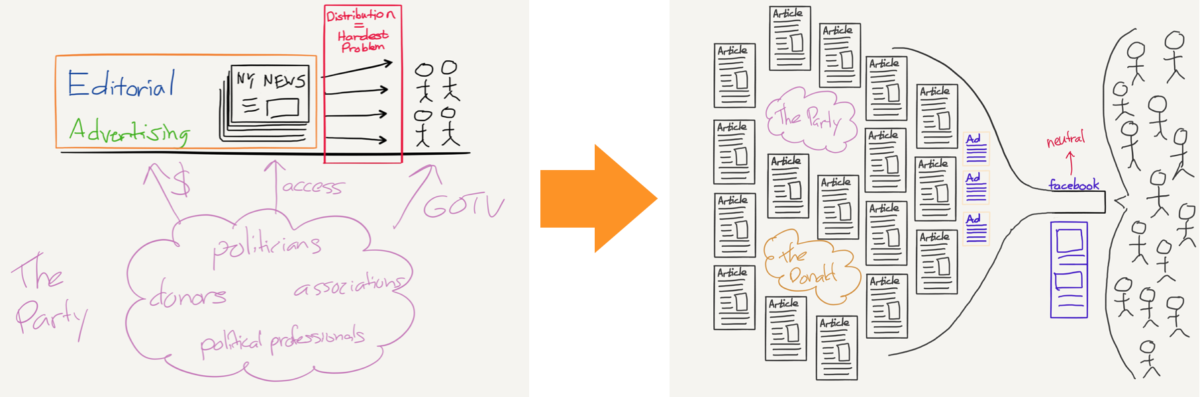
An apolitical analysis of what is happening in U.S. politics through the lens of Aggregation Theory
-
The FANG companies — Facebook, Amazon, Netflix, and Google — are far more similar than you might think. Their rise in value is no accident, and it is connected to Aggregation Theory.
-
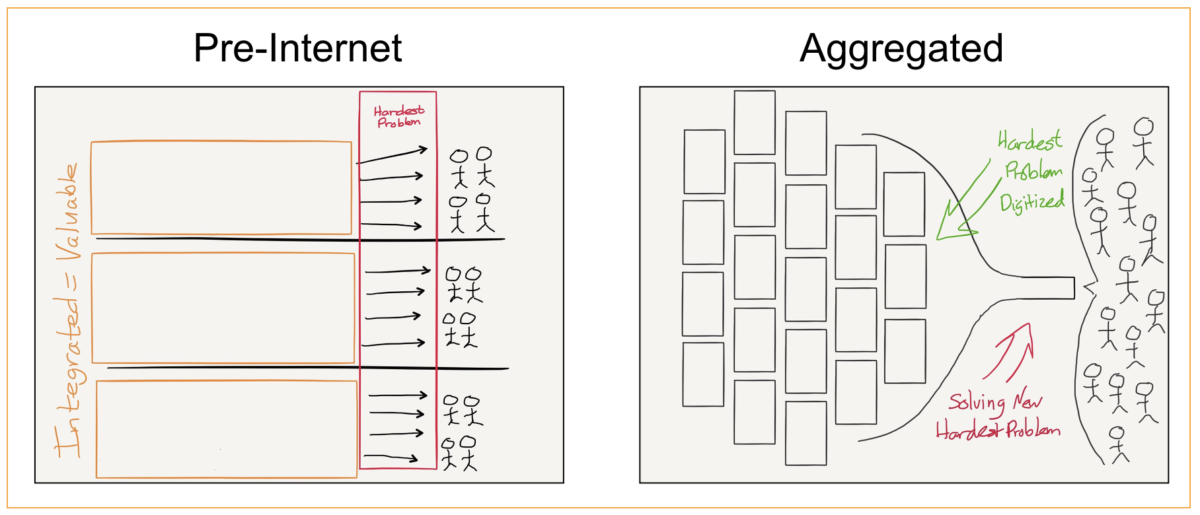
The disruption caused by the Internet in industry after industry has a common theoretical basis described by Aggregation Theory.

-
Everything is Changing; So Should Antitrust
WPP is dealing with not only a changing advertising industry but a changing world, thanks to the Internet. Antitrust needs to change as well.
-
Uber’s New CEO
Uber has a new CEO, and the reason he is a great choice explain why the Uber job is still an attractive one.
-
Disney’s Choice
Cable TV created a world where differentiated content could profit from everyone; that is why it will be hard for Disney to make the choices streaming will force on them.
-
Box and Google Cloud Vision, An Interview with Box CEO Aaron Levie
Box has made a deal to offer Google’s Vision AI services to its customers; is there space to be the intermediary between technology providers and end users? Box CEO Aaron Levie answers those questions and more.
-
Disney Shifts to Streaming, Disney Versus Netflix, ESPN
Disney is making big changes — finally. What will be fascinating to watch is if the company is willing to fully embrace the Internet and its own brand and become an aggregator.
-
Uber and Yandex; Grab Raises $2 Billion; Softbank, Ride-Sharing, and Capital
Uber has made a deal in Russia that, to the extent it approximates China, is a great idea. However, the company may soon be knocked out of Southeast Asia: capital is the ultimate aggregator.
-
Music Versus Publishing, Spotify’s Increasing Power
News publishers may want to emulate the music industry, but the only similarities that matter work in favor of the aggregators, not suppliers. Spotify is the perfect example.
-
Publishers and the Pursuit of the Past
The newspaper industry is seeking an antitrust provision to negotiate for a return to a world that is gone and never coming back; worse, it is an approach that could ruin publishing’s true future.
-
Ends, Means, and Antitrust
Google is a monopoly, and almost certainly a bad actor: shopping, though, is a terrible example that shows how regulators can go wrong.