

Aggregation Theory
Aggregation Theory provides a framework to understand the impact of the Internet on nearly all industries.
-
Zillow fits the description of an aggregator, but it hasn’t transformed its industry due to a lack of integration. Now it is trying to do exactly that.
-
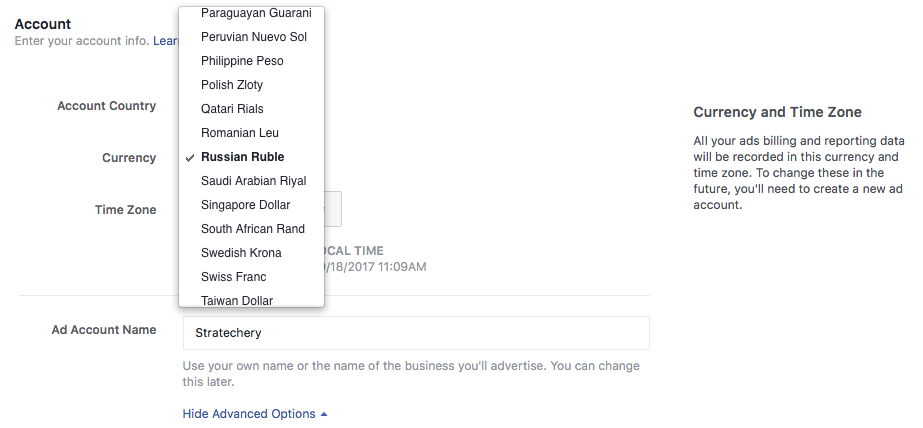
Facebook is in trouble — again — for Russian ads about the election; figuring out how to deal with them requires first understanding that Facebook, like Google, is a Super-Aggregator. It faces zero transaction costs…
-
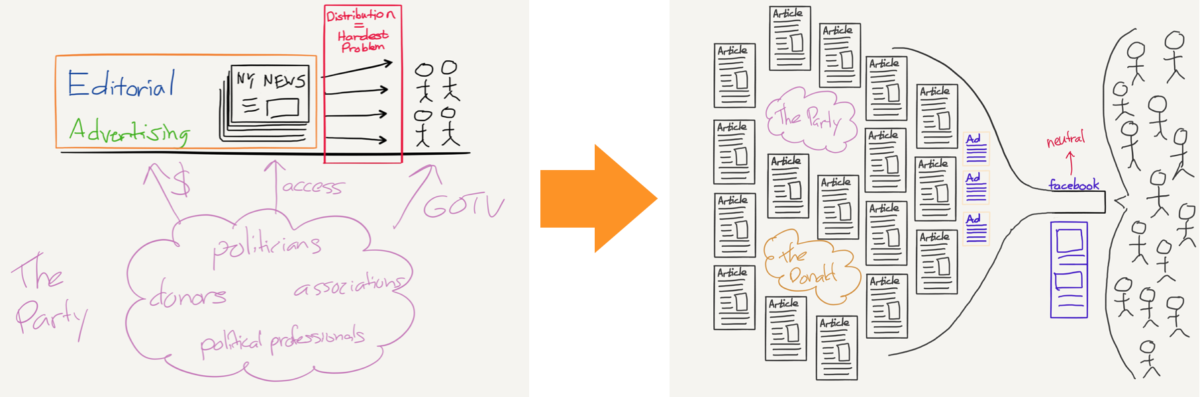
An apolitical analysis of what is happening in U.S. politics through the lens of Aggregation Theory
-
The FANG companies — Facebook, Amazon, Netflix, and Google — are far more similar than you might think. Their rise in value is no accident, and it is connected to Aggregation Theory.
-
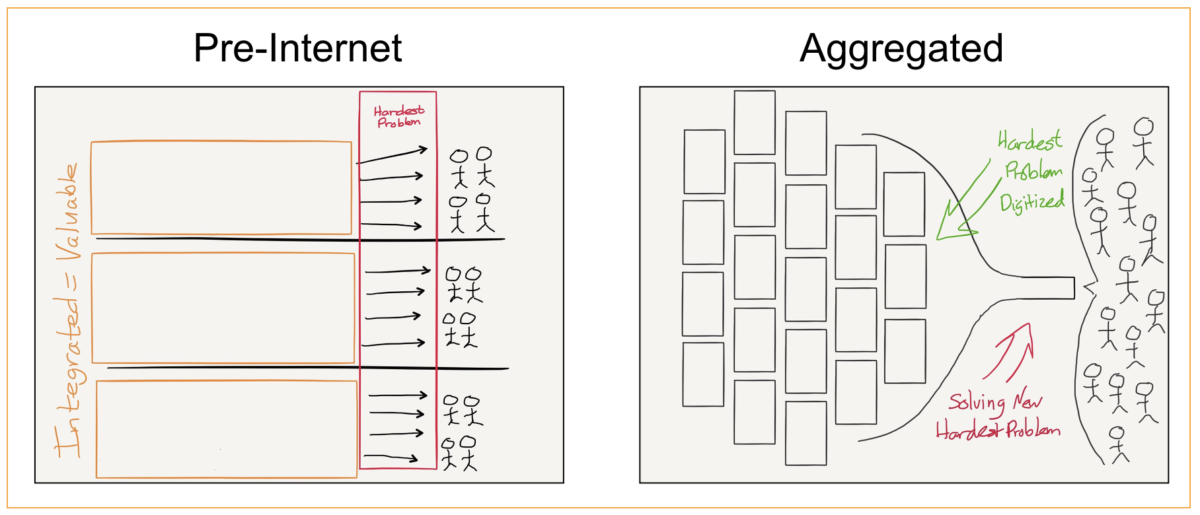
The disruption caused by the Internet in industry after industry has a common theoretical basis described by Aggregation Theory.

-
Antitrust and Aggregation
The European Commission’s antitrust case against Google is likely to be the first of many against aggregators, because the end game of Aggregation Theory is monopoly.
-
Blendle Launches in the U.S., An Interview with Alexander Klöpping, Apple Pay Coming to Websites
A bit of follow-up on why the SE might not succeed in India, and then an exploration of Blendle, the new micropayments platform for news that launched yesterday, along with an interview with co-founder Alexander Klöpping. Plus, Apple Pay for websites.
-
The Voters Decide
An apolitical analysis of what is happening in U.S. politics through the lens of Aggregation Theory
-
The FANG Playbook
The FANG companies — Facebook, Amazon, Netflix, and Google — are far more similar than you might think. Their rise in value is no accident, and it is connected to Aggregation Theory.
-
Netflix Goes Global, iPhone Worry
Netflix’s surprising announcement that the company was extending its service to nearly every country on earth was impressive in its execution, what it said about the company’s strategy, and it raised interesting points about Aggregation Theory and Netflix’s future opportunities. Plus, there is a lot of smoke when it comes to worries about the iPhone.
-
The Anti-Uber Alliance, WeChat Blocks Uber, Tiger Capital Invests in Uber
Didi Kuaidi, Ola, GrabTaxi, and Lyft are teaming up against Uber. Most are focused on Lyft, but they’re the least interesting part of this deal. Meanwhile, why is anyone surprised that Tencent would compete “unfairly”, plus, Tiger Capital hedges its bets.
-
Beyond Disruption
Clayton Christensen claims that Uber is not disruptive, and he’s exactly right. In fact, disruption theory often doesn’t make sense when it comes to understanding how companies succeed in the age of the Internet.
-
Marriott Acquires Starwood, Online Travel Agents and Aggregation, Surviving as an Incumbent
The impact of the Internet continues to reverberate: in this case, there is a clear link between Aggregation Theory and the tie-up between Marriott and Starwood.
-
Grantland and the (Surprising) Future of Publishing
ESPN’s decision to close Grantland seems to be more evidence that there is no future outside of massive scale or one-man operations. Bill Simmons’ recent successes, though, suggest that the answer could be the exact opposite.