

Aggregation Theory
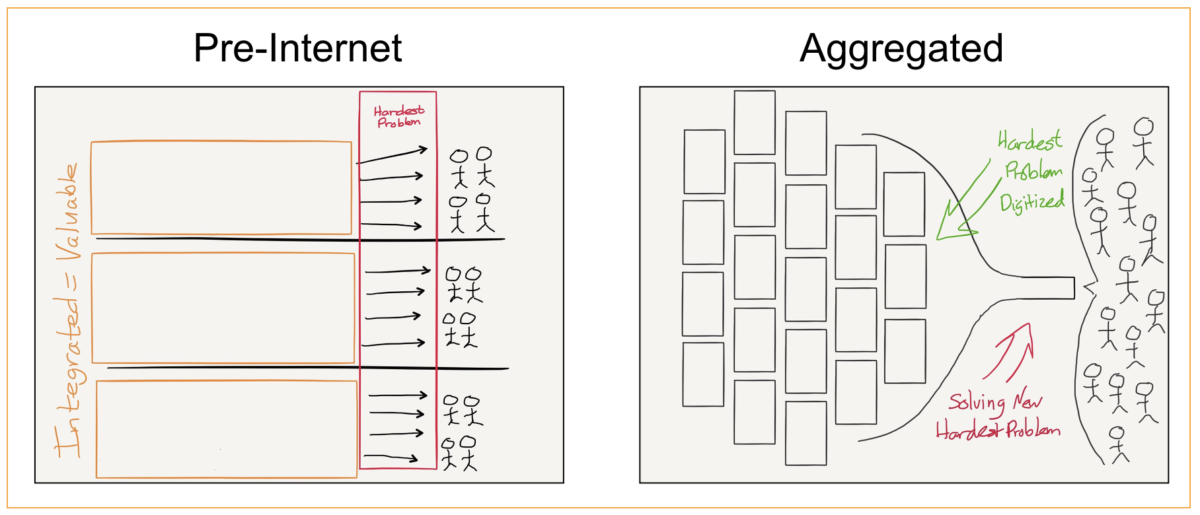
Aggregation Theory provides a framework to understand the impact of the Internet on nearly all industries.
-
Zillow fits the description of an aggregator, but it hasn’t transformed its industry due to a lack of integration. Now it is trying to do exactly that.
-
Facebook is in trouble — again — for Russian ads about the election; figuring out how to deal with them requires first understanding that Facebook, like Google, is a Super-Aggregator. It faces zero transaction costs…
-
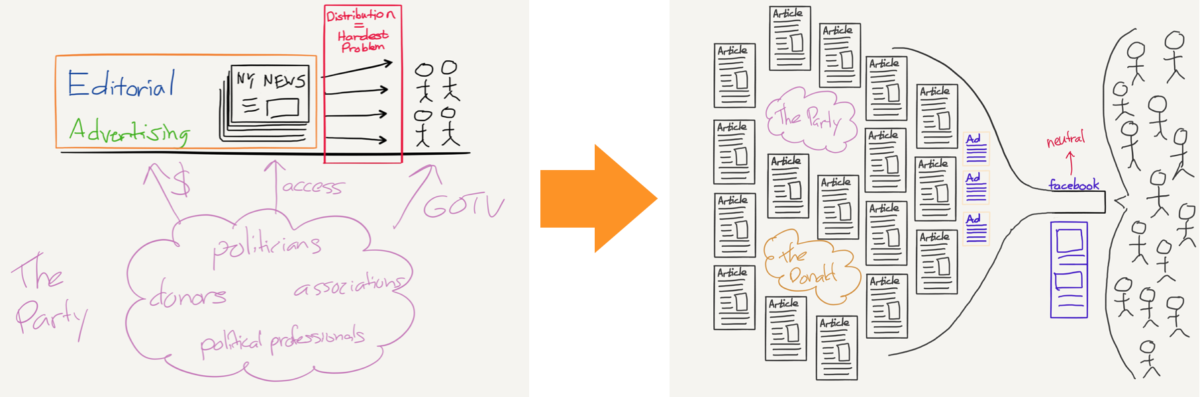
An apolitical analysis of what is happening in U.S. politics through the lens of Aggregation Theory
-
The FANG companies — Facebook, Amazon, Netflix, and Google — are far more similar than you might think. Their rise in value is no accident, and it is connected to Aggregation Theory.
-
The disruption caused by the Internet in industry after industry has a common theoretical basis described by Aggregation Theory.

-
Chase Pay and the Payments Stack, Apple Pay and Opportunity Cost, Applying Aggregation Theory
There’s another new payments solution coming — Chase Pay. The punchline is easy: it will fail. Why it will fail, though, is interesting, and it shows the opportunities and challenges for Apple Pay specifically and the usefulness of Aggregation Theory.
-
Are Ebooks Declining, or Just the Publishers?, Oyster Goes Out of Business, Media Notes
A follow-up on e-book publishing, and why there is so much dispute about just how many e-books are sold.
-
Disconfirming Ebooks
Aggregation Theory would seem to argue that ebooks are destined to dominate the publishing industry. However, that is decidedly not happening; understanding why is a powerful tool to make the theory better.
-
Ballmer’s Bad Bundle Economics, Netflix Loses Epix Movie Deal
The Daily Update is back with a renewed focus on streaming, bundling, and over-the-top offerings. First up is an analysis of Steve Ballmer’s rumored plans to launch an over-the-top network for Clippers games, and more broadly, a discussion about why bundling works. Then, Netflix loses movies, but it’s the content companies that are losing more from…
-
Aggregation and Antitrust, BuzzFeed Makes News, BuzzFeed’s Valuation in Perspective
The differing approaches to antitrust in the U.S. and Europe could mean completely different outcomes in the long run for aggregation companies. Meanwhile, BuzzFeed has raised a new round and seems to be doing better than ever, which is great news for journalism. Plus, how to think about startup valuations.
-
Aggregation and the New Regulation
Because of the Internet realities described by Aggregation Theory a smaller number of companies hold an increasing amount of power. However, an increasing focus on market forces reduces the latitude for bad behavior, and the incentives — and means — to hold those companies to account are greater than ever.
-
Why Disney and ESPN Will Be OK
An increasing number of questions are being raised about the future of the pay-TV bundle, and of ESPN. The former may indeed be doomed, but that doesn’t mean the latter is in as much trouble as people think: after all, Disney is the master of differentiated content.
-
German Automaker Consortium Buys Here Maps, Don’t Dismiss Apple MVNO Rumors
As expected a consortium of German automakers has acquired Here Maps. It’s hard to see this as anything other than defense of the status quo, particularly against Uber. What, though, will the latter do now? Then, the usual skepticism surround rumors that Apple will launch an MVNO. However, I think that Apple has more leverage than…