

Aggregation Theory
Aggregation Theory provides a framework to understand the impact of the Internet on nearly all industries.
-
Zillow fits the description of an aggregator, but it hasn’t transformed its industry due to a lack of integration. Now it is trying to do exactly that.
-
Facebook is in trouble — again — for Russian ads about the election; figuring out how to deal with them requires first understanding that Facebook, like Google, is a Super-Aggregator. It faces zero transaction costs…
-
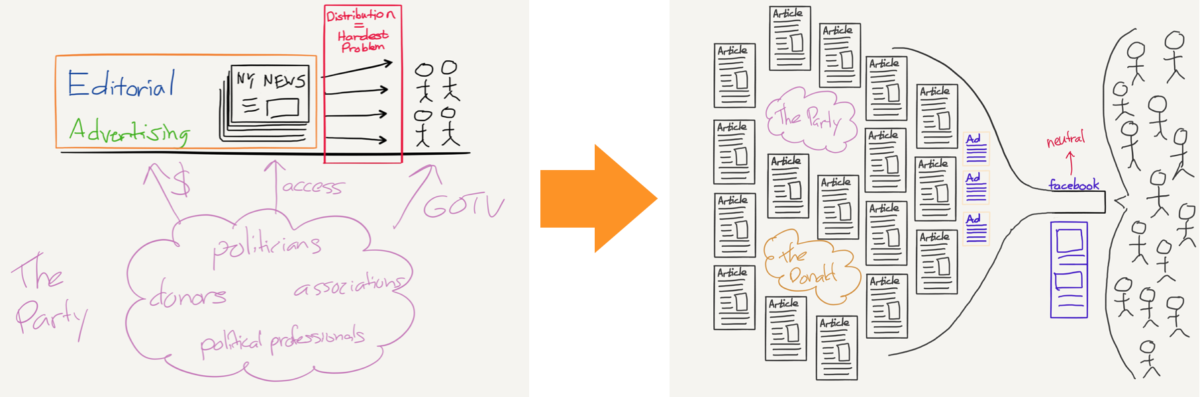
An apolitical analysis of what is happening in U.S. politics through the lens of Aggregation Theory
-
The FANG companies — Facebook, Amazon, Netflix, and Google — are far more similar than you might think. Their rise in value is no accident, and it is connected to Aggregation Theory.
-
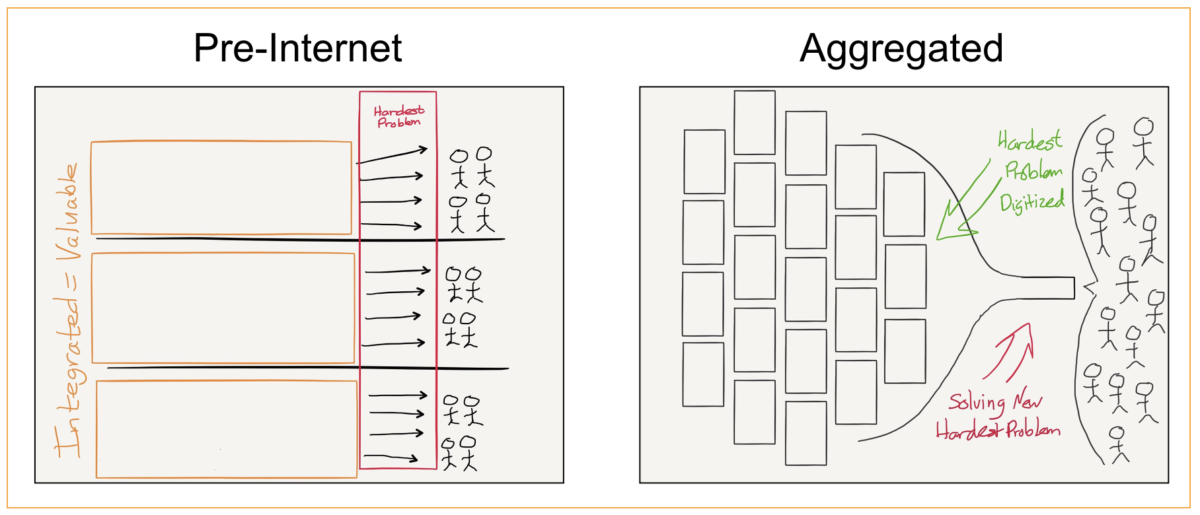
The disruption caused by the Internet in industry after industry has a common theoretical basis described by Aggregation Theory.

-
In Defense of Markets, The Qualcomm Mess, Uber and de Blasio
I think that the stock market tends to get a bad rap amongst tech pundits and executives; in fact, it is a critical part of how new companies defeat incumbents. Still, sometimes markets get it wrong and I think that is the case with Qualcomm. Plus, what Uber’s episode with New York City mayor Bill de…
-
Aggregation Theory
The disruption caused by the Internet in industry after industry has a common theoretical basis described by Aggregation Theory.
-
Google’s Impressive Earnings, Ebay’s Uncertain Future
Google had great results that were impressive not just from a dollars and cents perspective, but also from a strategic perspective. Plus, brief thoughts on Ebay as it spins off Paypal.
-
Google’s Integration of Retail and Hotels, Facebook Page Shops, Netflix’s Earnings
Google’s “buy button” for ads and experiments in hotels fit the pattern of Internet-based disruption. Facebook, meanwhile, is meeting needs it itself created, and Netflix has started a virtuous cycle.
-
Netflix and the Conservation of Attractive Profits
Netflix has a lot more in common with Uber and Airbnb than you might think: it all comes back to the Law of Conservation of Attractive Profits, a core principle of disruption
-
The Funnel Framework
The Internet has removed scarcity, meaning business models based on controlling distribution are no longer viable. Instead, the key to success is controlling access to the best customers — and that means being the best.
-
Facebook and the Feed
In a week where much of the Internet was all atwitter about Mobilegeddon, Google’s pre-announced algorithm change that will favor mobile-friendly sites in mobile search results, a potentially far more impactful announcement was much more of a surprise: Facebook is tweaking the News Feed algorithm. This is a big deal for publishers in particular: according […]
-
Daily Update: Samsung’s Retreat, The Uncrossable Curve?, Gawker Writers Seek to Unionize
-
Daily Update: Facebook to Host Media Content, Vox’s Facebook Strategy and Keywee, Bill Simmons’s Next Move